Tub to shower conversion or a new walk-in shower: which fits your Dallas bathroom
Both remove the step over a tub. They differ in size, plumbing, cost and schedule, and the right one depends on the room and who uses it.
By Russell Leach, Bathroom Remodeling Guides EditorUpdated October 20264 min read
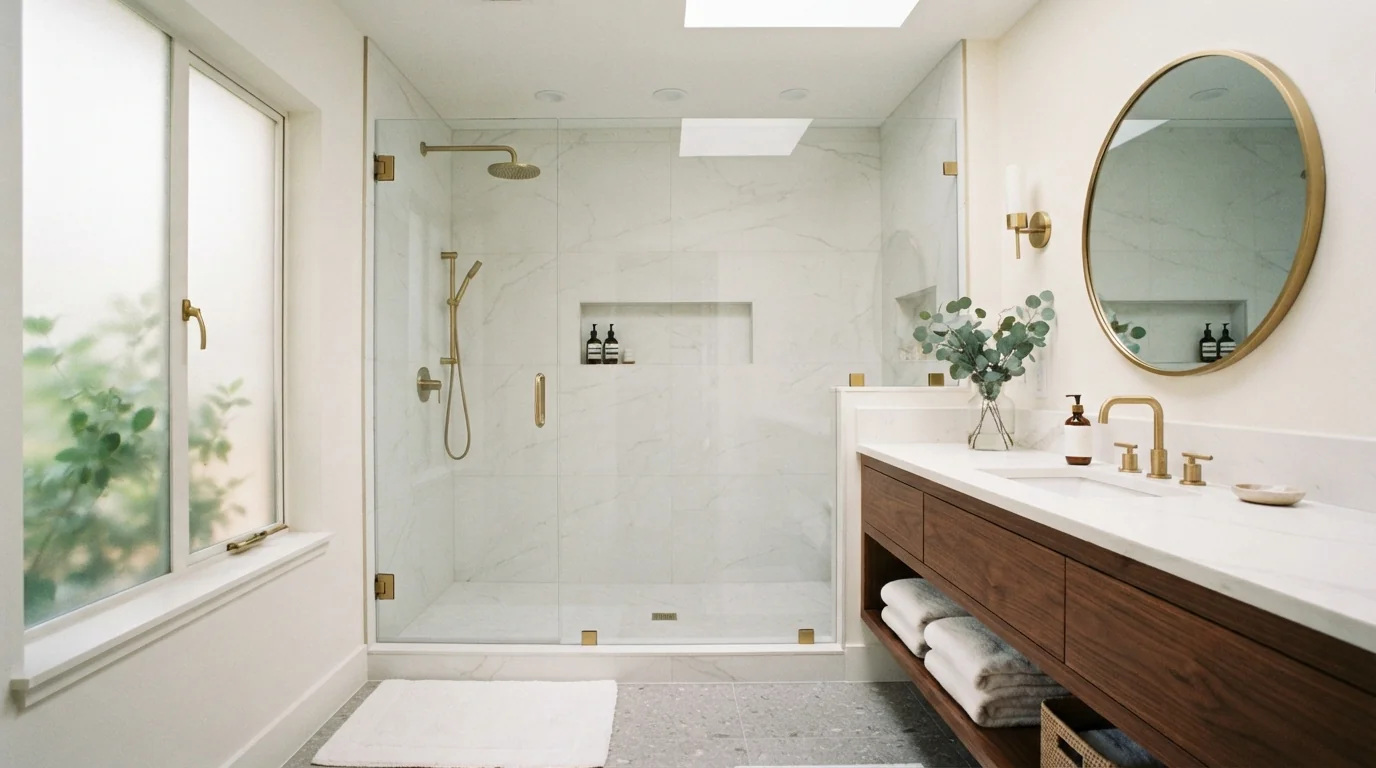
A tub to shower conversion in Dallas replaces the tub with a shower in the same 60-inch space, often in two to five days, at about 1,200 to 8,000 dollars nationally. A new walk-in shower is built to its own size and layout, usually one to two weeks, and Dallas shower installations average about 8,923 dollars.
The difference in one sentence each
A conversion works inside the footprint the tub already occupies: the tub comes out, the drain is reworked and a shower goes into the same alcove.
A walk-in shower is designed from scratch: its size, entry, bench and drain position are chosen for the room, which may mean moving walls, fixtures or both.
Size and layout
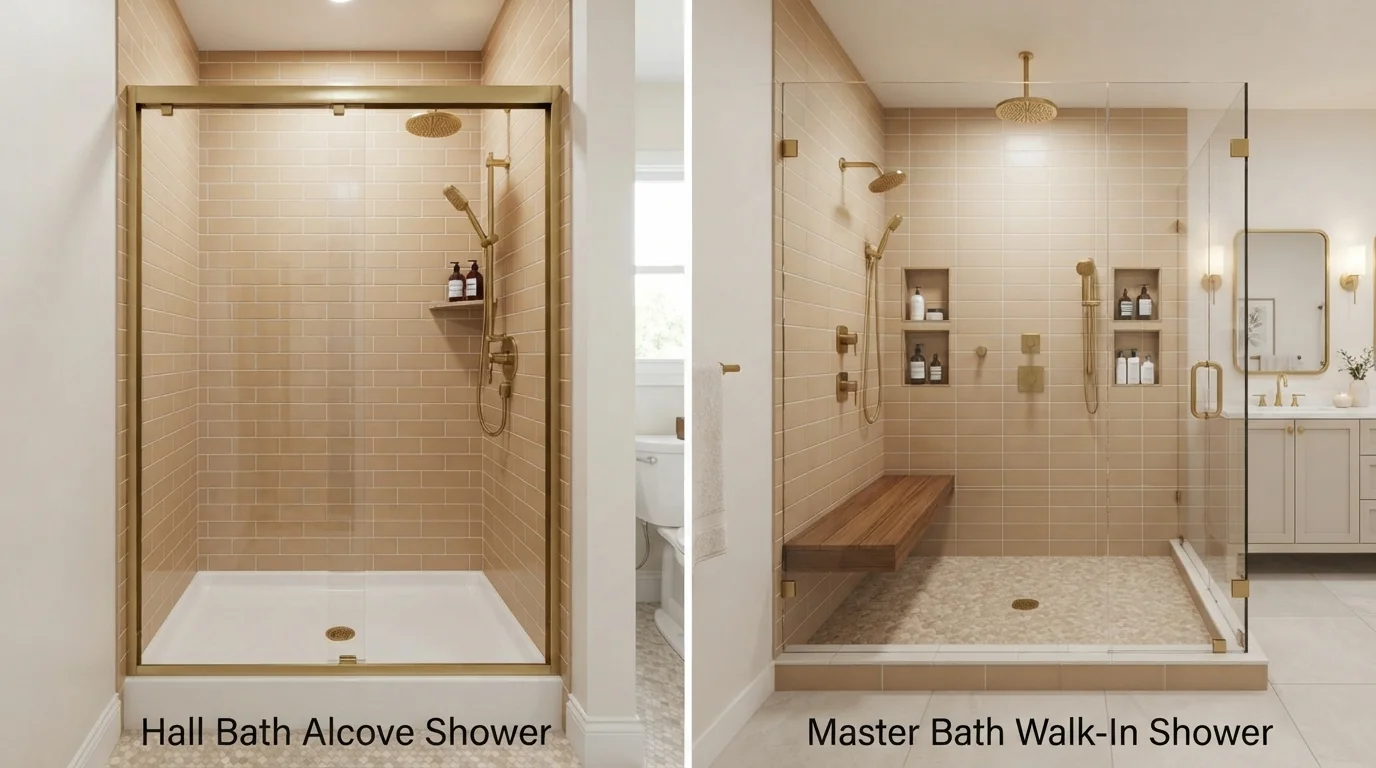
A conversion is limited to about 60 by 30 inches, the size of a standard tub. That is plenty for most people, and acrylic bases come in 60 by 30 or 60 by 32. A walk-in shower can be 36 by 60, 42 by 72 or larger, with room for a bench and a glass panel instead of a door.
If the bathroom has space beside the tub, such as an old garden tub corner in a master bath, a walk-in shower can use it. If the tub sits in a hall bath alcove, a conversion is usually the practical choice.
Plumbing and the slab
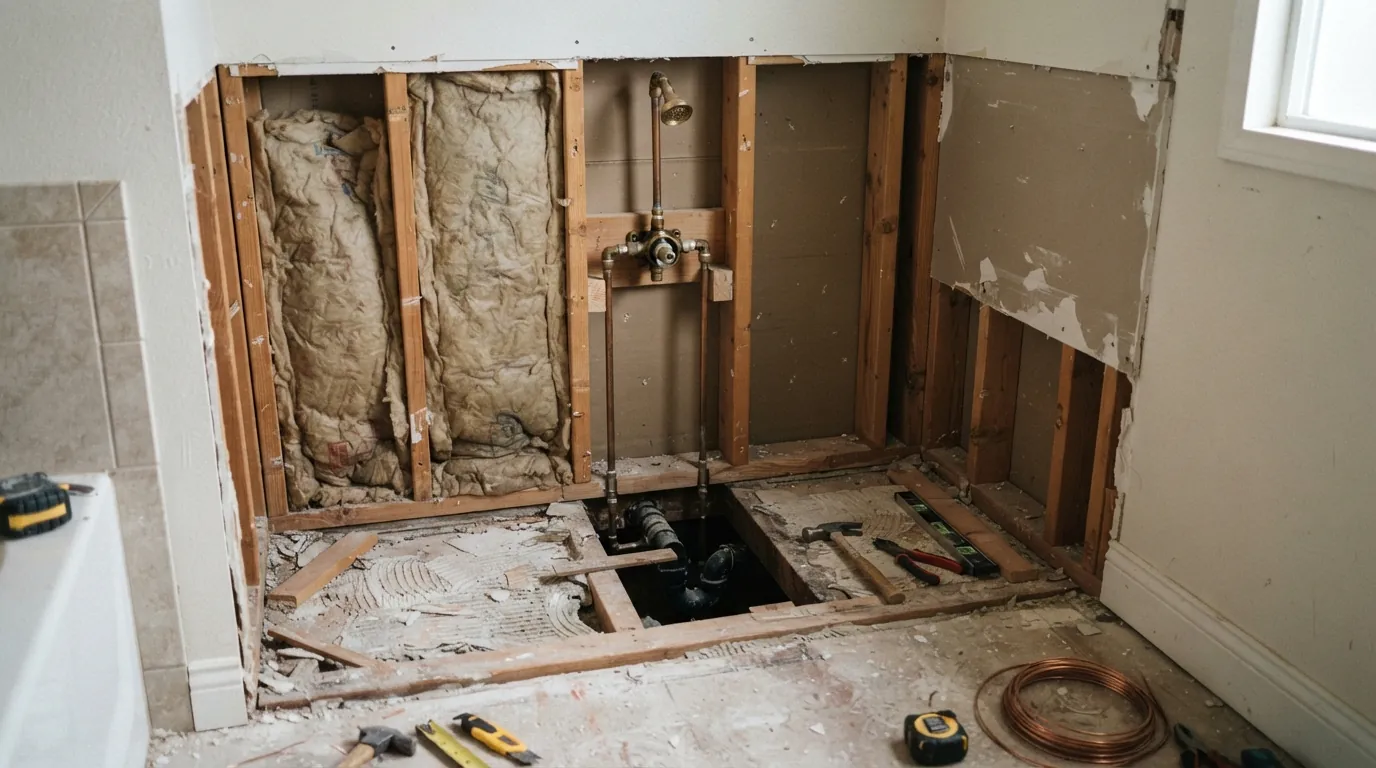
A conversion keeps the drain close to where it is, rerouting the trap arm a short distance, and the valve is raised to shower height. A walk-in shower in a new position needs a new drain, which on a Dallas slab means trenching or tunneling, at roughly 2,000 to 8,000 dollars per moved fixture in market data.
Curbless entries add a step on either route: the pan is recessed into the slab so the floor stays level from room to shower, with a linear drain along the back wall.
What each one costs
These are market ranges, not quotes. They show how far apart the two options usually sit.
| Option | Typical range |
|---|---|
| Conversion, acrylic kit installed in Dallas | About 1,994 to 3,989 dollars |
| Conversion, national range | About 1,200 to 8,000 dollars, average near 3,000 |
| Tiled conversion | About 3,500 to 15,000 dollars |
| Shower installation in Dallas | About 6,490 to 12,365 dollars, average near 8,923 |
| Large luxury shower build | Up to about 16,000 dollars |
| Shower door or glass | About 600 to 1,350 dollars |
Not sure which one fits your room? Call (214) 646-2836, any hour.
Call nowAccessibility and resale
For anyone who struggles with a tub wall, both options help, and a curbless entry helps most. Grab bar blocking and a handheld shower belong in either build; see accessible remodels.
On resale, Dallas market data shows like-for-like tub swaps return less than midrange remodels, and most buyers are comfortable with a shower in one bathroom as long as the house still has a tub somewhere. If this is your only tub, think about who might buy the house.
What each build involves, step by step
A conversion runs in a tight sequence: the surround is cut back and the tub removed, the trap arm is rerouted and the valve raised, then either an acrylic base is set in mortar and the wall panels sealed, or a pan is built, flood-tested for 24 hours and tiled. Glass or a curtain rod goes on last.
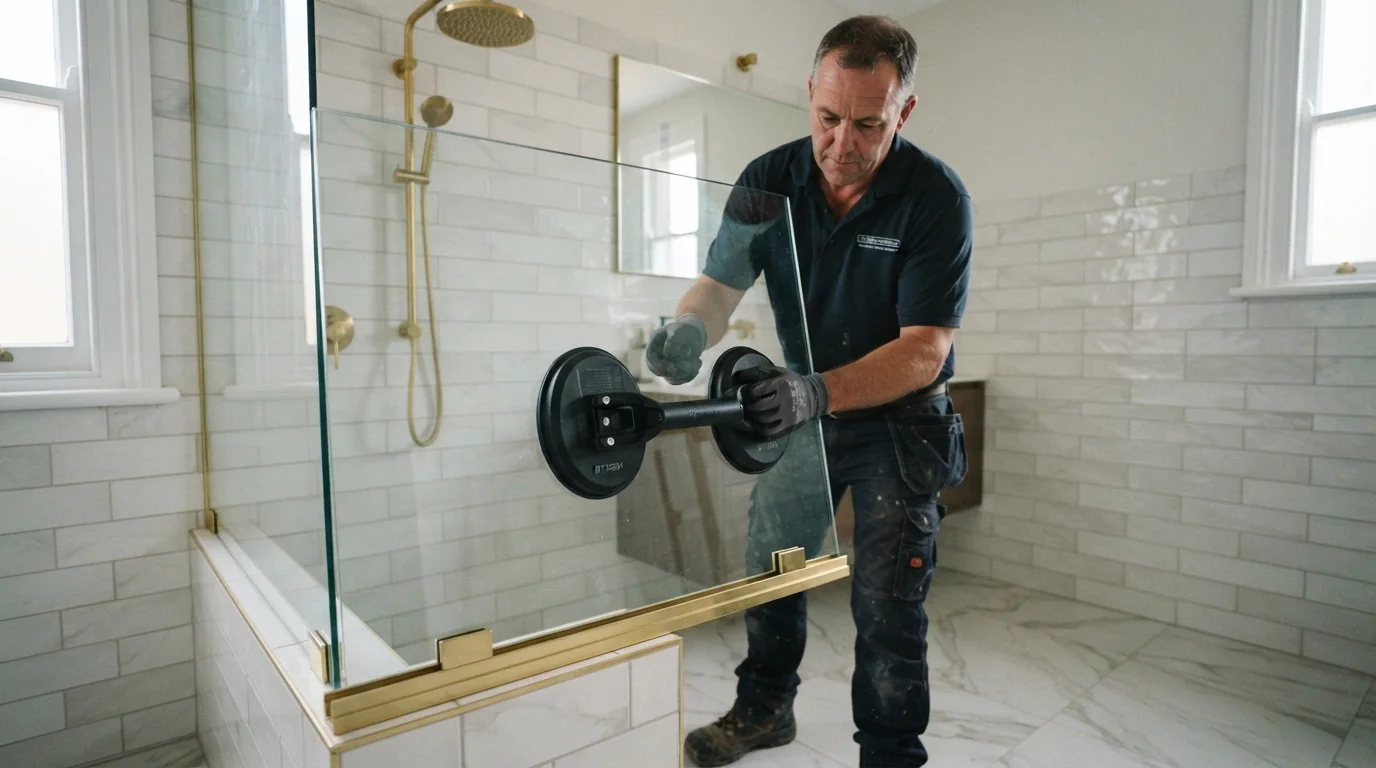
A walk-in shower adds planning at the front. The size, bench, niches and drain position are drawn first; on a slab, any drain move is trenched or tunneled and inspected; then the pan, bench and niches are built and waterproofed together before tile. Frameless glass is measured once the tile is finished, which is why it arrives a week or two after the rest.
How to decide
Choose a conversion when the tub sits in an alcove, you want the shortest schedule and budget, and the layout already works. Choose a walk-in shower when the room has space to give, you want a bench or a curbless entry wider than the alcove allows, or the shower is part of a bigger remodel.
Both start the same way: we pull the tub, check the floor under it, and replace any corroded supply lines behind the wall. See conversions and walk-in showers for the full process on each.
Conversion and walk-in shower questions
Something else? Call and ask, any hour.
Usually, because it stays in the tub footprint and keeps the drain close to where it is.
A conversion takes two to five days in acrylic; a walk-in shower one to two weeks plus glass.
Yes, by recessing the pan into the slab, though it adds a day of concrete work.
Less so if another tub remains in the house.
In tile, yes; acrylic kits offer molded seats.
Not for a same-location swap; moving the drain or adding a circuit does.
Talk through your room
Call and describe the tub, the room around it and who uses it. We will tell you which option fits and what it would take.
2353 Bryan St, Dallas, TX 75201