Bathroom exhaust fan installation in Dallas, ducted outside and sized right
A fan that vents into the attic or is too small for the room just moves the damp around. We size it, duct it to the outside and put it on a control you will actually use.
Updated October 2026. Service office: 2353 Bryan St, Dallas. Phones answered 24/7.
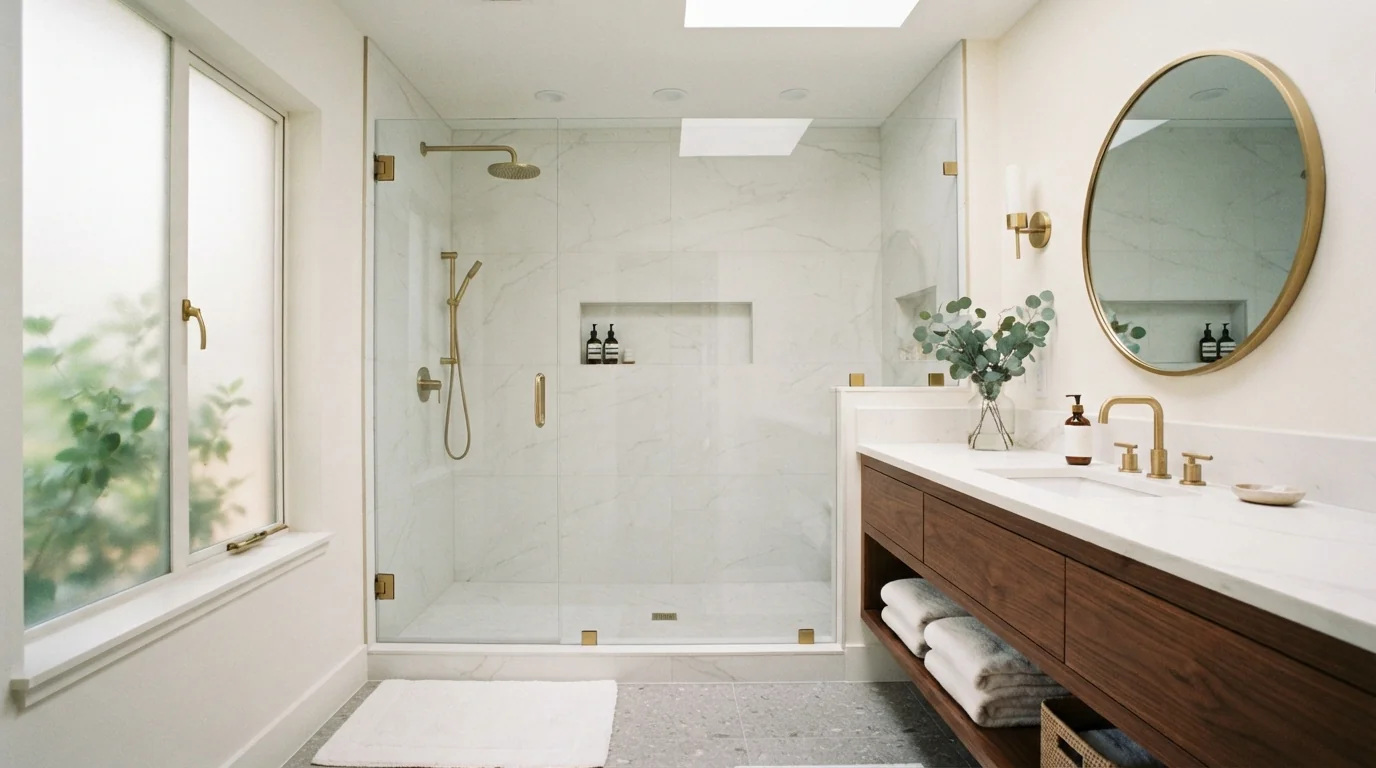
Fans and controls we install in Dallas bathrooms include Panasonic, Broan and NuTone fans with Leviton and Lutron timers and humidity controls.
Bathroom exhaust fan installation in Dallas replaces or adds a ceiling fan, runs rigid or insulated duct to a roof or wall cap outside, and wires it to a timer or humidity sensor. The fan is sized to the room, roughly one cubic foot per minute per square foot in a standard bathroom, and a fan that vents into the attic is rerouted outside.
What a fan installation includes
- Attic inspection of the existing duct
- Fan sized to the room and duct run
- Housing fixed to framing, ceiling patched
- Insulated duct to a roof or wall cap
- Damper and exterior cap sealed
- Timer or humidity control installed
- Airflow checked at the grille
Why a bathroom fan fails, even when it runs
A fan that hums but leaves the mirror fogged is usually one of three things: too small for the room, too restricted by a long or crushed duct, or never connected to the outside at all.
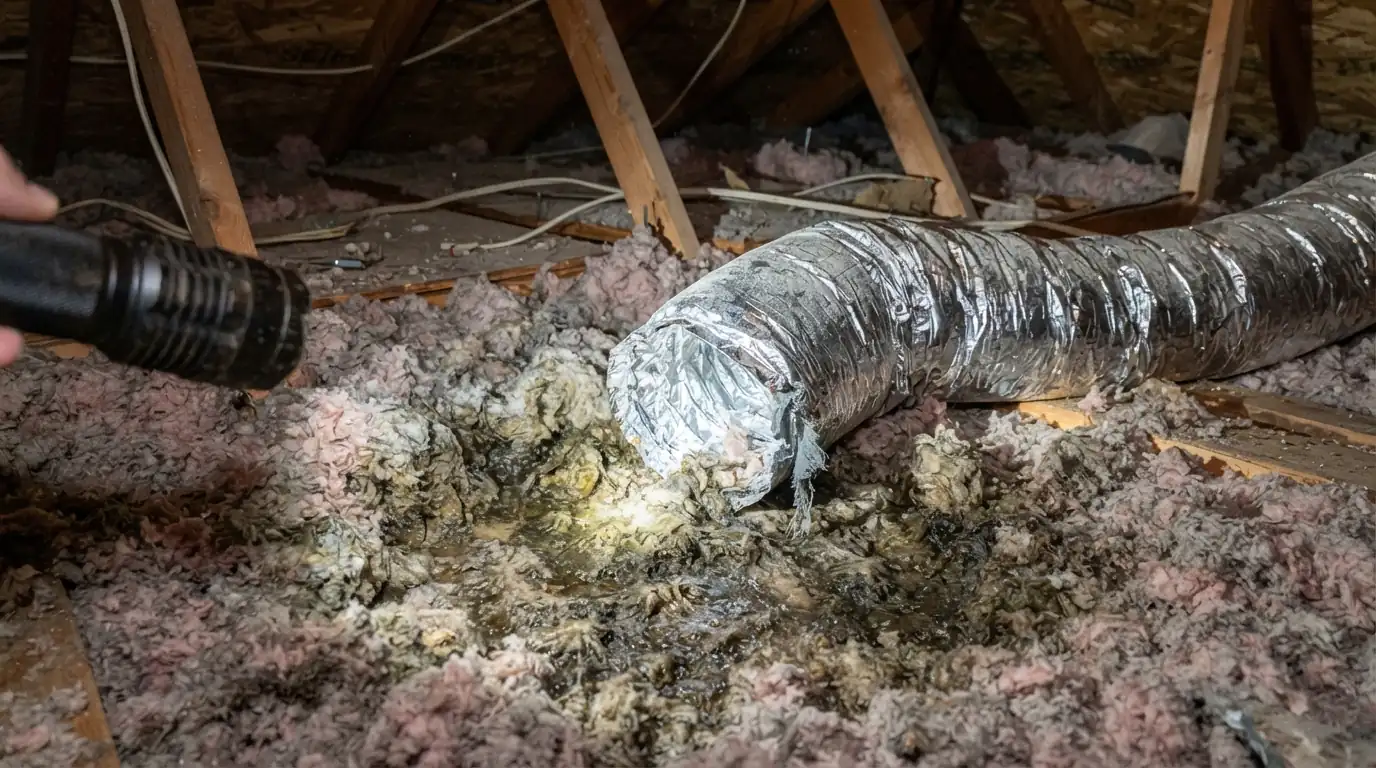
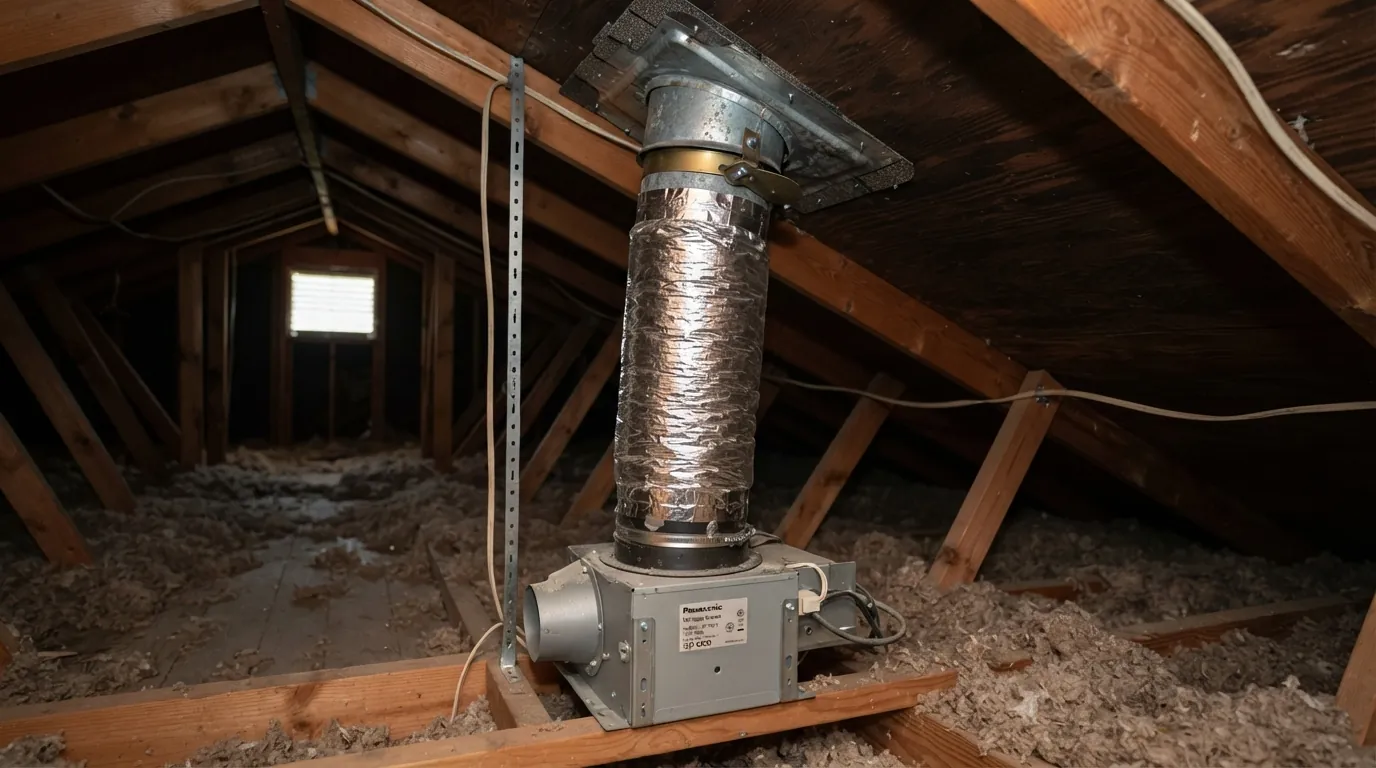
The third turns up in older and builder-grade homes, where the duct stops in the attic or was never attached. That puts warm, wet air onto the roof deck and insulation, which is its own problem.
We start with the duct. Then we size a Panasonic or Broan fan to the room, set it where it pulls steam from the shower, and wire it to a timer or humidity control so it keeps running after you leave.
The three fan jobs we do most
Fan Replacement in the Existing Opening
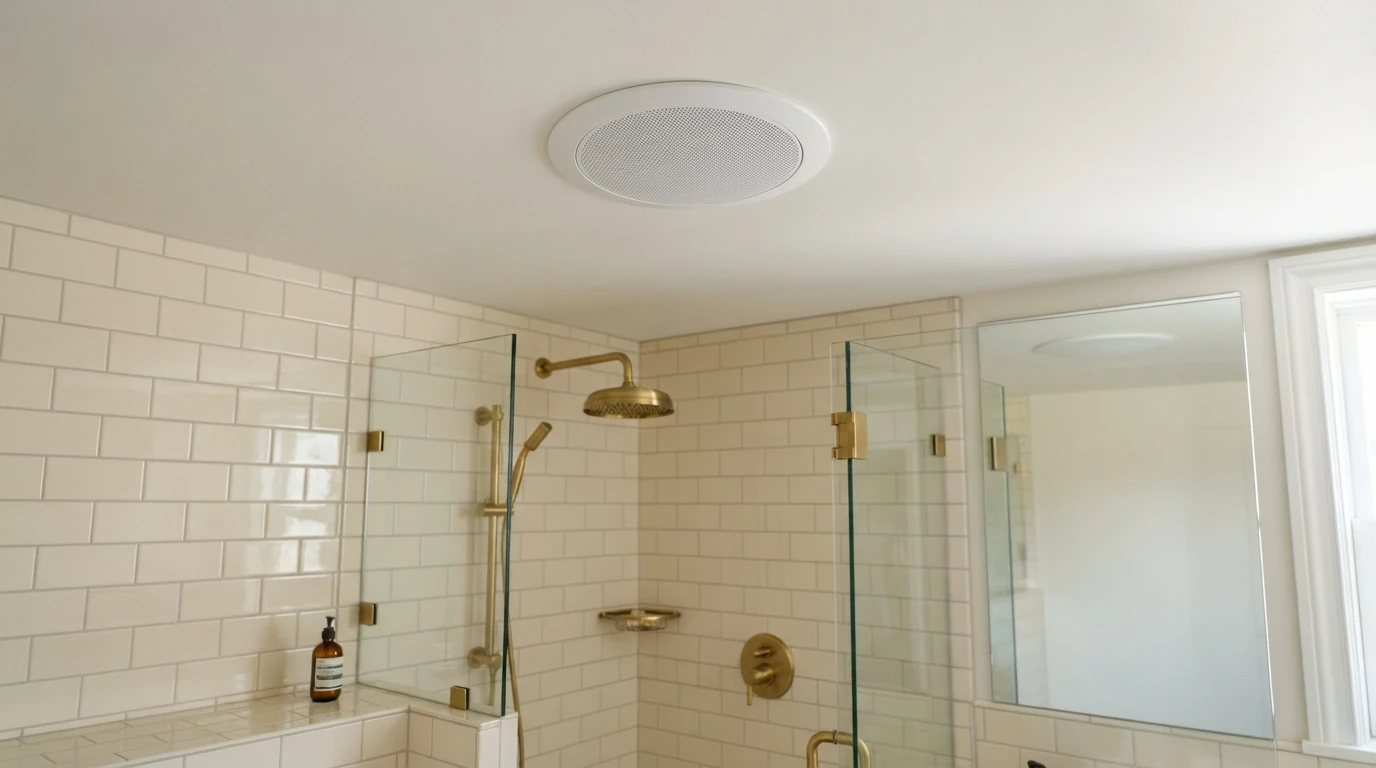
When the old fan is noisy, weak or dead but the duct is sound and goes outside, we replace it in the same ceiling opening. Many replacement fans are sized to fit old housings, which keeps ceiling patching to a minimum. We still check the duct run from the attic side, clean or replace the damper, and confirm the cap outside opens. A quieter fan gets used more often, so we look at the sone rating as well as the airflow before recommending one.
New Fan with a Duct Run to the Exterior
Where there is no fan, or the fan dumps into the attic, we install a new housing and run duct to a roof jack or wall cap. Short, straight runs with smooth rigid or insulated duct move air best; long runs with tight bends lose most of a fan's rating. In the attic, duct is insulated so warm air does not condense inside it and drip back into the fan. The outside cap gets a damper and is sealed and flashed into the roof or siding.
Humidity-Sensing and Timer Fans
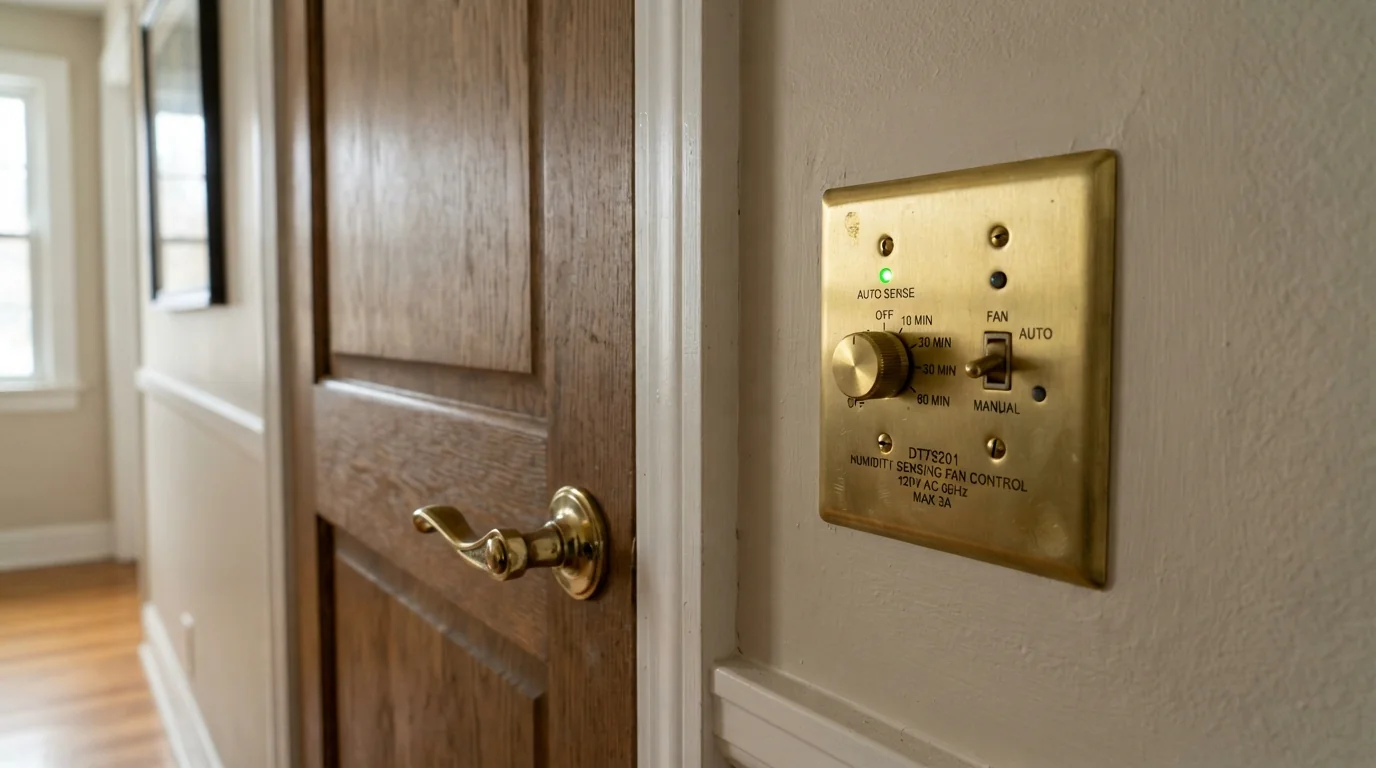
Many fans are switched off too soon. A countdown timer or a humidity-sensing control keeps the fan running for twenty minutes or so after a shower, which is when it does most of its work. Some fans have the sensor built in; otherwise we fit a wall control. Combination fans with a light or night light replace a separate ceiling light in small rooms. If the switch box needs changing or a new circuit is required, it goes in under a Dallas electrical permit.
Permits for bathroom fan work in Dallas
A like-for-like fan swap on the same wiring is simple. New wiring, a new circuit or a relocated control needs a Dallas electrical permit, and bathroom permit fees in the city typically run about 50 to 700 dollars depending on scope, with applications handled through the DallasNow portal. We fold that into the price and the schedule so a fan job does not stall waiting on paperwork.
Signs your bathroom fan is not doing its job
Mirror stays fogged
Steam that lingers long after the shower.
Peeling ceiling paint
Moisture sitting on the ceiling each day.
Mildew in corners
Black spots on the ceiling or at the top of the tile.
Fan barely pulls a tissue
Hold a tissue to the grille; weak pull means low airflow.
Loud rattling or humming
A worn motor or loose housing.
Damp attic insulation
Wet or stained insulation above the bathroom.
Door swells or sticks
Humidity absorbed by trim and doors.
How an exhaust fan installation runs
- 1
Call and describe the problem
Fog, mildew, peeling paint or noise.
- 2
Check the attic
Where the duct goes, or whether there is one.
- 3
Size the fan
Room size, duct length and noise level.
- 4
Install the housing
Opening cut or reused, housing fixed to framing.
- 5
Run the duct
Insulated duct to a roof or wall cap.
- 6
Wire the control
Timer or humidity sensor, permitted if new wiring.
- 7
Test the airflow
Damper and cap checked, fan run with you.
What decides the cost of an exhaust fan job
The fan is the cheap part. The duct and the ceiling decide the rest.
Existing duct or new
Reusing a sound outdoor duct is far simpler than running a new one.
Roof or wall exit
A new roof jack needs flashing; a wall cap needs siding work.
Attic access
Tight or missing attic access slows the duct work.
Fan features
Quiet, humidity-sensing and light combo fans cost more.
Housing size
A larger housing than the old one means cutting the ceiling.
Wiring
New switches or a circuit add electrical work and a permit.
Bathroom fan questions we get
Something else? Call and ask, any hour.
Look for a cap on the roof or wall, or check the attic; many end in the insulation.
About one CFM per square foot for a standard bathroom, more for large or tall rooms.
The fan may be too small, the duct restricted, or it is turned off too soon.
Around twenty minutes; a timer handles it.
Yes, combination units are common in small bathrooms.
For new wiring or circuits, yes; a same-wiring swap is simpler.
Yes; see ceiling repair.
More Vanities, Fixtures & Lighting work we do in Dallas
Bathroom Vanity Installation
Double Vanity Installation and more, in Dallas.
Learn moreToilet Installation and Replacement
Comfort-Height Replacement and more, in Dallas.
Learn moreFaucet and Fixture Replacement
Sink Faucet Replacement and more, in Dallas.
Learn moreFrom our guides
Stop the moisture at the ceiling
Call and describe what is happening: fogged mirror, peeling paint or mildew. We will check where the air is actually going and tell you what fan fixes it.
2353 Bryan St, Dallas, TX 75201