Choosing tile for a Dallas bathroom: material, size and what goes underneath
The tile you see matters less than the tile you choose for the job it has to do, and far less than what it is set on. Here is how to choose for floors, showers and walls.
By Russell Leach, Bathroom Remodeling Guides EditorUpdated October 20264 min read
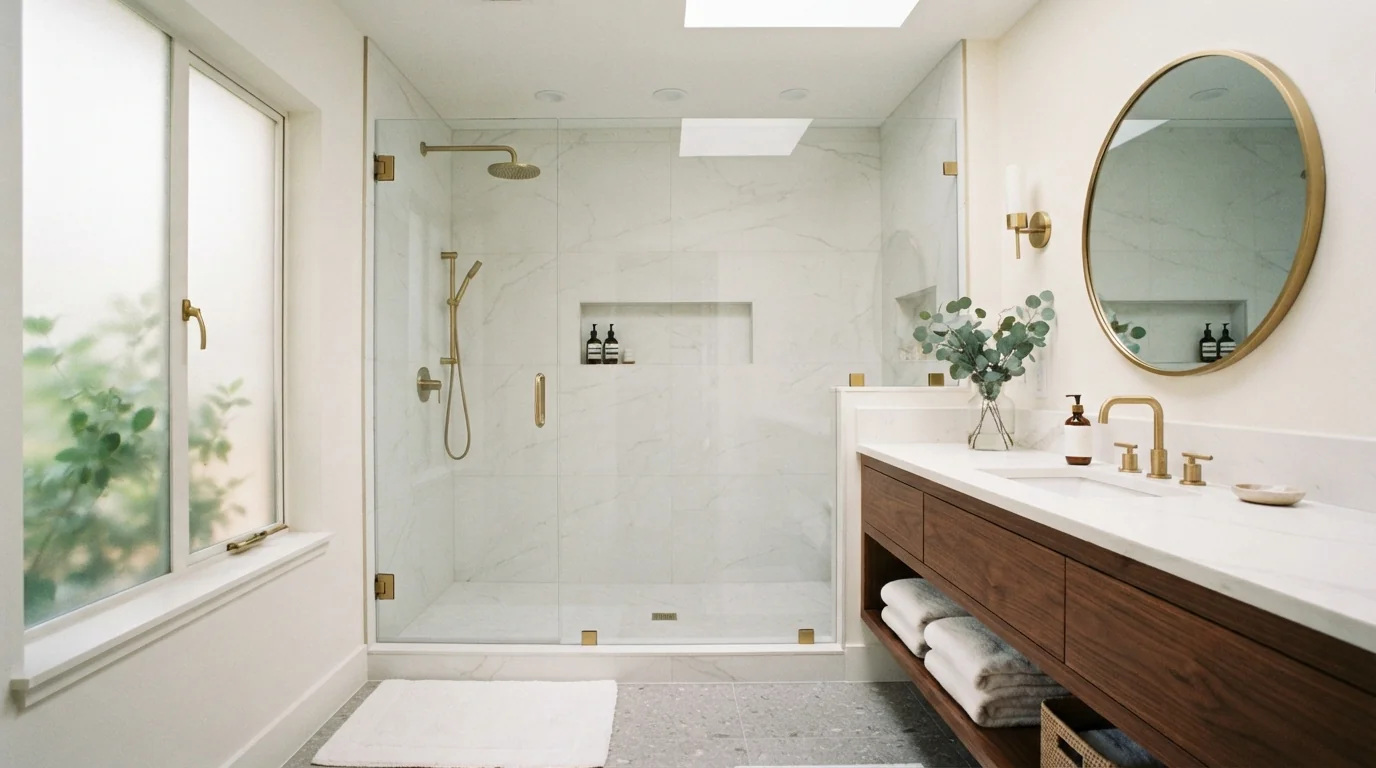
For a Dallas bathroom, porcelain is the safest choice for floors and showers: it absorbs very little water and comes in slip-resistant finishes. Ceramic suits dry walls, and natural stone needs sealing. Because Dallas slabs move with the clay beneath them, the membrane under the tile matters as much as the tile itself.
Porcelain, ceramic or natural stone
Each material has a place. The table shows where each one works best in a bathroom.
| Porcelain | Ceramic | Natural stone | |
|---|---|---|---|
| Water absorption | Very low | Higher | Varies; needs sealing |
| Best for | Floors, showers, walls | Dry walls, backsplashes | Feature floors and walls |
| Slip-resistant options | Many | Fewer for floors | Honed finishes grip better |
| Upkeep | Low | Low | Periodic sealing |
| Cutting and setting | Harder; needs good tools | Easy | Needs care; can chip |
Why what goes under the tile matters in Dallas
Dallas County sits on Blackland Prairie clay, classed as a cracking clay because it shrinks and swells enough to damage foundations. Slab floors move slightly with it, and tile bonded straight to a moving slab cracks along the same line again and again.
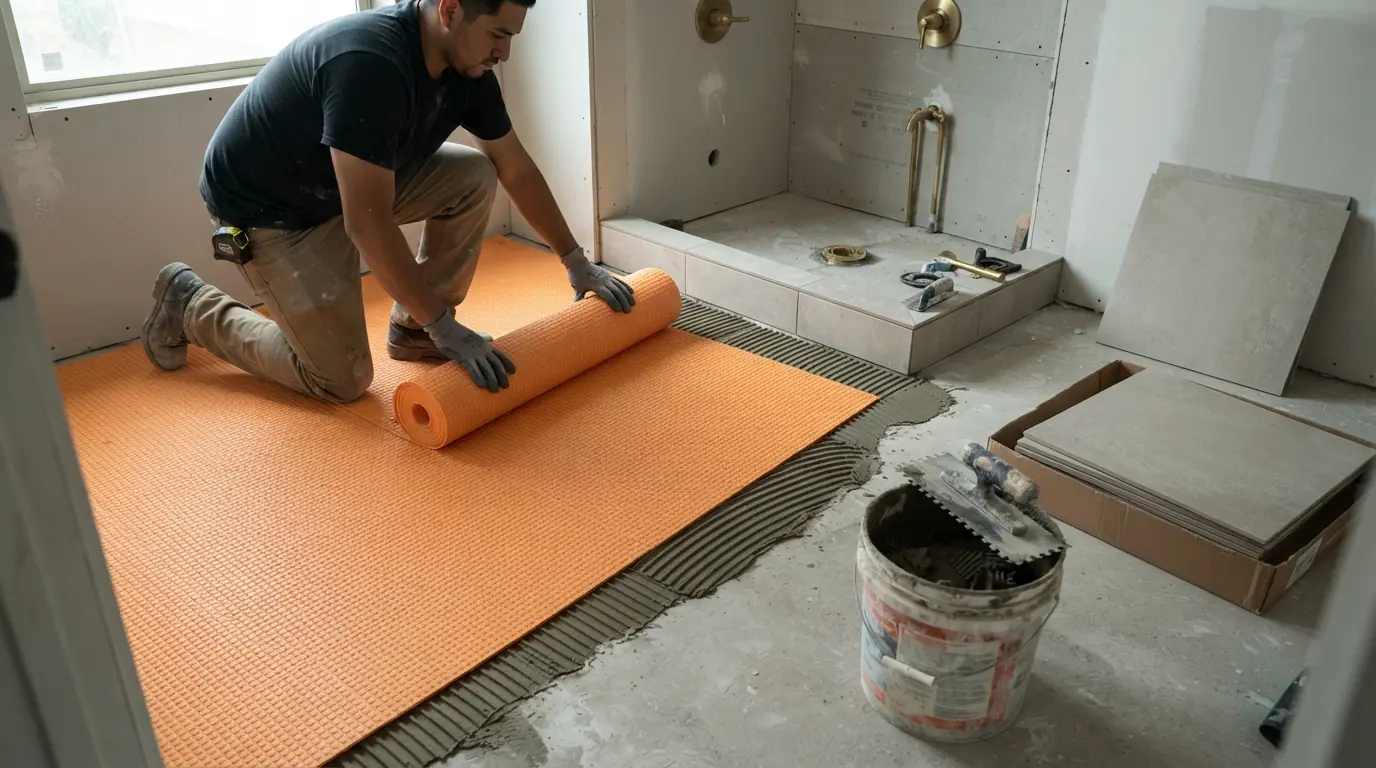
An uncoupling or crack-isolation membrane between the slab and the tile absorbs that movement. In showers, a waterproofing membrane behind and under the tile is what keeps water out of the walls and floor. Neither is visible when the job is done, and both decide whether the tile lasts.
Choosing tile size
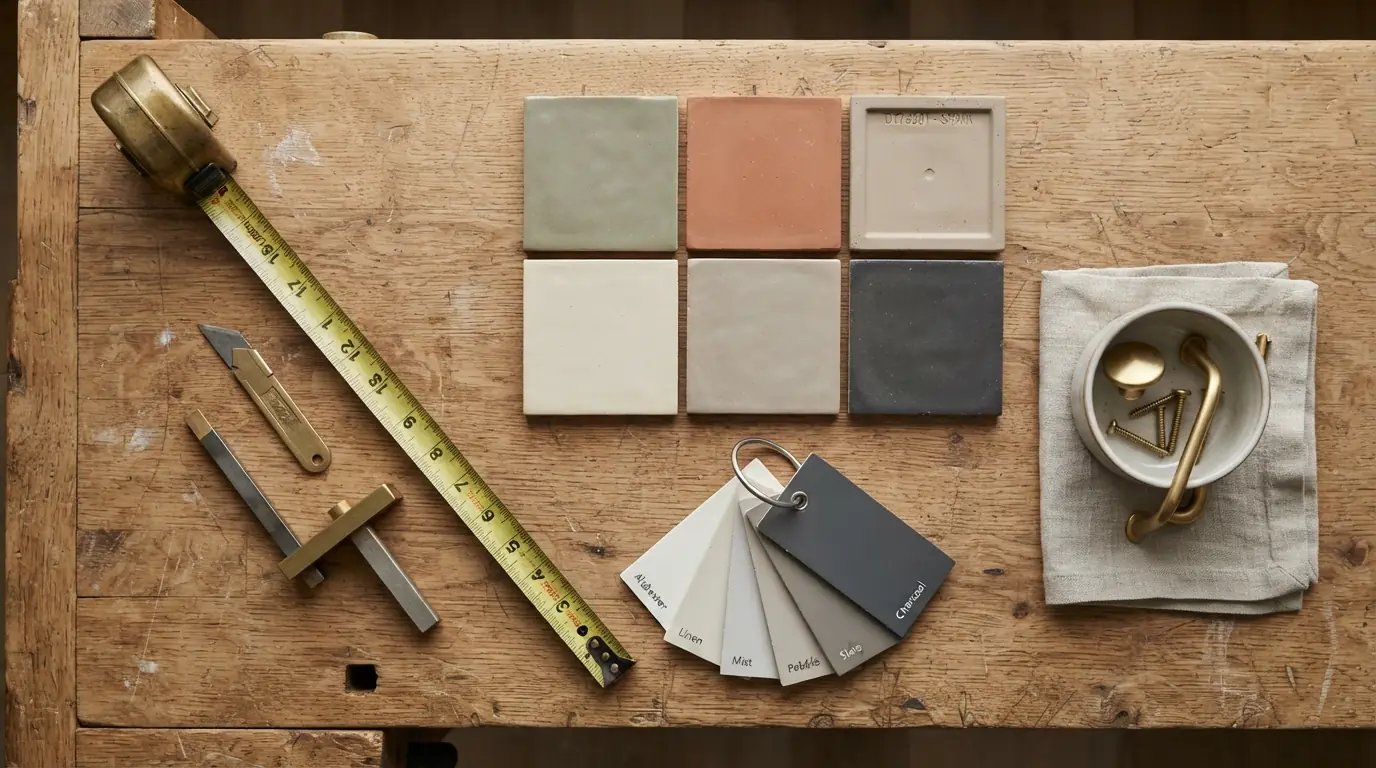
Large-format tile, 24 inches and up, means fewer grout lines and a calmer look, but it needs a flatter floor and more labor to set without lippage. Small tile and mosaics follow the slope of a shower floor better and give more grip underfoot, which is why many showers pair large wall tile with a smaller floor tile.
In small bathrooms, a single larger floor tile carried into the shower makes the room read as one space.
Slip resistance and the shower floor
Glossy tile looks good and gets slick when wet. For floors and shower pans, look for textured or matte porcelain rated for wet areas, or use small mosaics whose grout lines add grip. A honed stone floor is less slippery than a polished one.
Ask to see the tile wet before you commit; it is the quickest test of how it will feel in the shower.
Choosing tile for your bathroom? Call (214) 646-2836, any hour.
Call nowGrout and trim
Cement grout is the standard and needs sealing. Epoxy and some urethane grouts resist stains and do not need sealing, at a higher cost and with more careful installation. Grout color changes the look as much as the tile: matching grout hides the pattern, contrasting grout shows it.
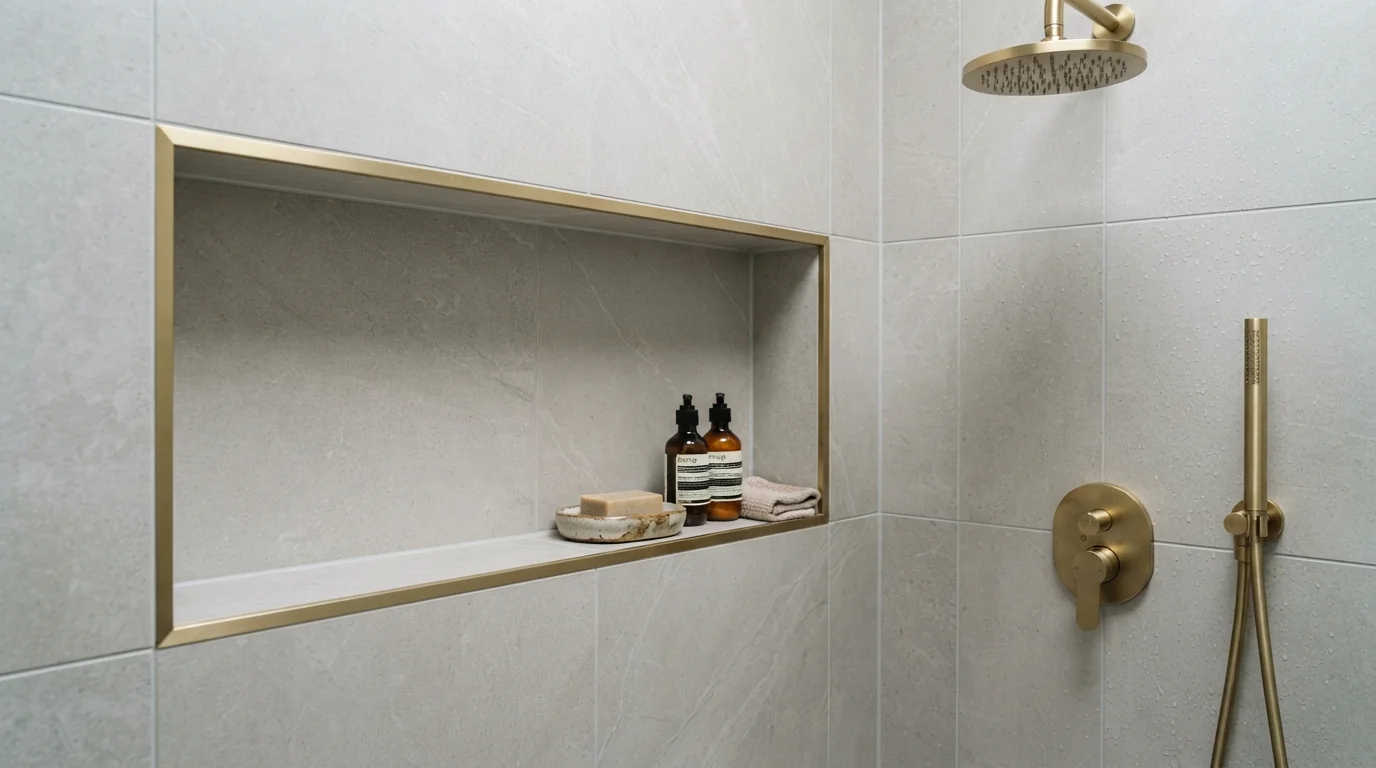
Edges are where tile jobs look finished or not. Metal trim profiles give a clean edge on niches, outside corners and the top of a wainscot.
Keeping bathroom tile looking new
Porcelain itself needs little more than regular cleaning with a pH-neutral cleaner; acidic and abrasive cleaners wear down cement grout and etch natural stone. Cement grout benefits from resealing every year or two in a shower, and less often on a bathroom floor.
The joints that fail first are the ones where surfaces meet: where wall meets tub, floor or curb. Those should be flexible silicone, not grout, and recaulking them when they split keeps water out of the wall. See tile and grout repair when a joint keeps failing.
What drives the cost of tile work
Tile installation is mostly labor, and remodel labor in Dallas runs about 10 to 15 percent above the Texas average. Large-format tile, herringbone and other patterned layouts, stone, and floors that need leveling all add time. Material choice matters less than people expect; a mid-range porcelain set well outlasts an expensive tile set badly.
See tile installation and flooring replacement for how we prepare and set each surface.
Bathroom tile questions
Something else? Call and ask, any hour.
Textured or matte porcelain rated for wet areas.
On walls, often; porcelain is the safer choice for floors and pans.
In Dallas, a crack-isolation membrane is strongly recommended because slabs move.
On floors and walls, yes; small tile often works better on a shower floor.
Cement grout does; epoxy grout does not.
It can be, with sealing and more upkeep than porcelain.
Get tile advice for your room
Call and tell us which areas you want to tile and the look you like. We will talk material, size and what the substrate needs before you buy.
2353 Bryan St, Dallas, TX 75201