Bathroom repiping in Dallas: galvanized and cast iron out, new lines in
Low water pressure, rusty water or a drain that keeps backing up usually means the bathroom's old pipes are at the end of their life. We replace them, ideally while the walls are already open.
Updated October 2026. Service office: 2353 Bryan St, Dallas. Phones answered 24/7.
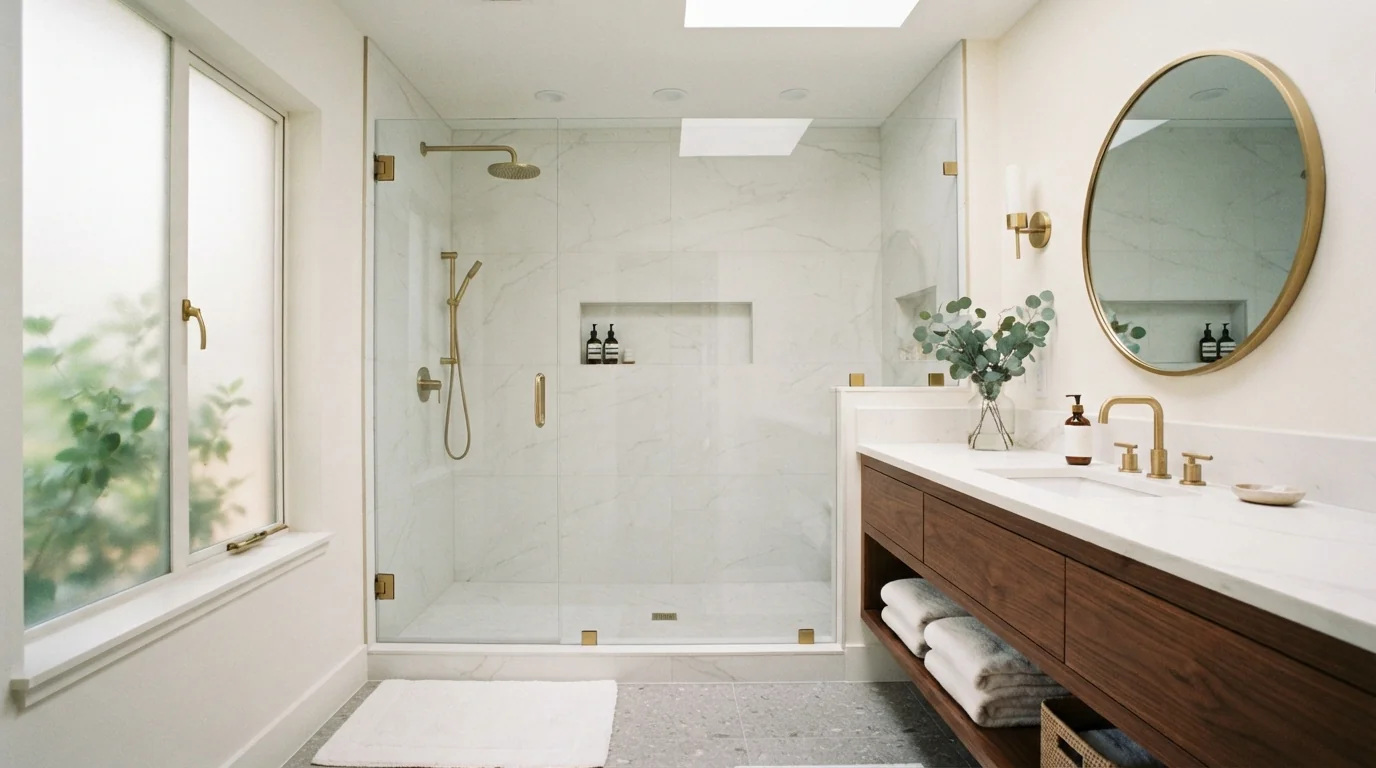
Bathroom repiping in Dallas means replacing a bathroom's old supply lines, usually galvanized steel, and often its cast iron drains with modern PEX or copper supply and PVC drain lines. It is most cost-effective during a remodel, when the walls and floor are already open, and it needs a plumbing permit and inspection before the walls are closed.
When a bathroom needs new pipes
Galvanized steel supply pipe corrodes from the inside, and Dallas's mineral-rich water speeds that up. Over decades the inside of the pipe narrows, pressure drops, the water runs rust-colored after it sits, and eventually a joint or thin spot leaks inside the wall. Cast iron drains have the opposite problem: they crack, scale up and rust through along the bottom of the pipe, which shows up as slow drains and sewer smell.
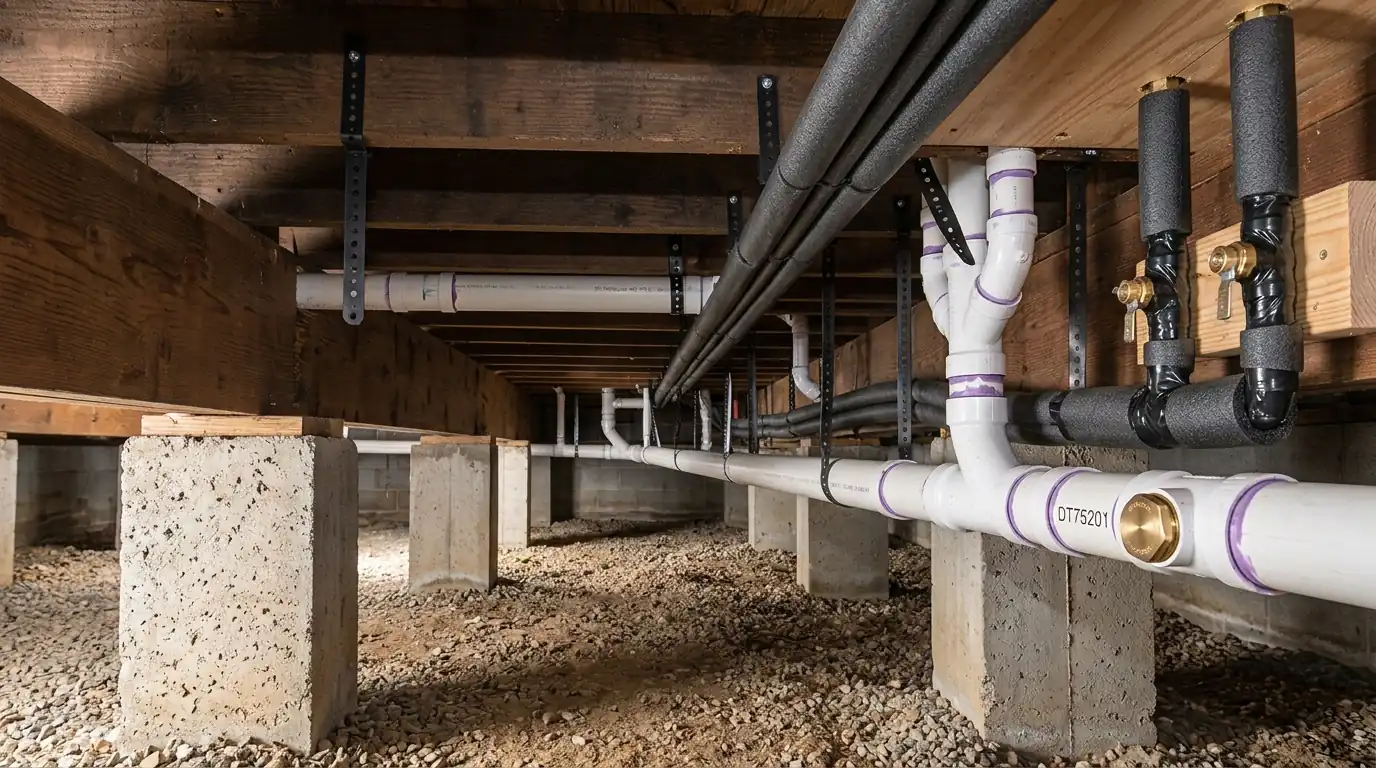
Repiping a single bathroom replaces the lines from the point where they enter the room, or from the nearest sound connection, to every fixture. On a slab, the drains run under the concrete; on pier and beam, they are reached from the crawlspace. We map both before quoting.
The three kinds of bathroom repipe we do
Galvanized Supply Line Replacement
The most common repipe in older Dallas homes replaces galvanized steel supply lines with PEX or copper from the nearest sound connection to each fixture: the shower valve, tub spout, sink and toilet. Where the galvanized line continues to other rooms, we replace it back to a point where the pipe is still in good condition, or advise on a whole-house repipe if the rest is just as corroded. New lines are pressure-tested before any wall is closed, and the shower valve is often replaced at the same time, since an old valve on new pipe is the next weak point.
Cast Iron Drain Replacement
Cast iron drains under a bathroom fail along the bottom, where water sits, and the first sign is usually a slow drain that never fully clears or a sewer smell. On a pier-and-beam house we cut out the failed sections from the crawlspace and replace them with PVC, connecting back to sound pipe. On a slab, the floor is trenched along the line, the old pipe replaced, the new run inspected for slope and connection, and the slab patched before new flooring. A camera inspection beforehand shows how far the damage runs.
Repiping During a Remodel
The best time to repipe is when the bathroom is already being remodeled. With the tile, drywall and floor already out, replacing the supply lines adds little labor, and replacing an old drain under a slab that is being trenched for a new shower costs a fraction of what it would as a separate job. We price the repipe as a line item in the remodel scope, so you can see what it adds, and we recommend it whenever we find galvanized or failing cast iron behind the walls, because reopening new tile later costs far more.
What decides the cost of a bathroom repipe
Access and scope drive the price more than pipe material.
Supply only or drains too
Drain replacement adds most when it runs under a slab.
Slab or crawlspace
Crawlspace access is quicker than trenching concrete.
Walls already open
During a remodel the repipe adds much less labor.
Distance to sound pipe
The farther back the corrosion runs, the more pipe.
Valve replacement
Swapping the shower valve while open adds a small cost.
Patching and finishes
Separate repipes need drywall and tile repair afterward.
Why Dallas bathrooms need repiping
Older Dallas homes frequently still have galvanized supply pipes corroded by mineral-rich water, a pattern we see in neighborhoods like Oak Cliff and Lake Highlands. About fifteen percent of occupied homes in Dallas were built before 1950, and homes at least 45 years old are far more likely to show physical problems. If a bathroom has never been fully remodeled, there is a good chance its original pipes are still in the walls.
What a bathroom repipe includes
- New PEX or copper supply lines to every fixture
- New shut-off valves at the sink and toilet
- Cast iron drain sections replaced where failing
- Pressure test of all new supply lines
- Plumbing permit and inspection
- Slab or wall patched after the work
- Old pipe removed and hauled away
How long a bathroom repipe takes
Replacing the supply lines in one bathroom usually takes one or two days, plus a day or two for drywall or tile patching if the walls were not already open. Replacing drains under a slab adds trenching, inspection and patching, and usually runs several days. During a full remodel, the repipe fits into the demolition and rough-in stage and adds little to the overall schedule.
How a bathroom repipe runs
- 1
Call and describe the symptoms
Pressure, rust or slow drains.
- 2
Inspect and map the lines
Supply, drain and access points.
- 3
Camera the drains
How far the damage runs.
- 4
Written scope and permit
Filed before any demolition.
- 5
Open and replace
New supply and drain lines installed.
- 6
Pressure test and inspection
Before any wall is closed.
- 7
Patch or finish
Walls, floor and fixtures back in place.
Signs a bathroom needs new pipes
Low pressure at one bathroom
Weak flow at the shower or sink only.
Rusty water
Brown or orange water after the tap sits.
Slow drains that keep coming back
Clears, then slows again within weeks.
Sewer smell
An odor from the floor drain or tub.
Gray threaded pipe under the sink
A sign of galvanized supply lines.
Water stains near a wall
Damp drywall or baseboard by fixtures.
Banging or rattling pipes
Loose or failing old lines in the wall.
Bathroom repiping questions
Something else? Call and ask, any hour.
Look where a supply line enters a wall under a sink: galvanized pipe is dull gray steel with threaded joints.
Both are reliable; PEX is quicker to install and flexes with slab movement, copper is rigid and long-proven.
Yes, back to a sound connection, though badly corroded houses often need more.
Yes, in Dallas plumbing work needs a permit and an inspection before walls close.
If corroded galvanized pipe is the cause, yes; we check the main supply too.
Supply lines alone often take a day or two plus patching; drains under a slab take longer.
Yes, the phone is answered 24 hours a day, and a sudden leak gets help shutting off the water first.
More Accessibility & Repairs work we do in Dallas
Accessible Bathroom Remodel
Roll-In Shower with Fold-Down Seat and more, in Dallas.
Learn moreBathroom Water Damage Repair
Subfloor Replacement Around the Tub or Toilet and more, in Dallas.
Learn moreGrab Bar and Safety Installation
Grab Bars Anchored Into Studs or Blocking and more, in Dallas.
Learn moreFrom our guides
Replace the pipes before they fail
Call and tell us what you are seeing at the taps and drains. We will inspect the lines and give you a written scope.
2353 Bryan St, Dallas, TX 75201