Bathroom plumbing relocation in Dallas: drains, supplies and vents moved properly
The plumbing behind a new layout: drains moved with the right slope, vents that let them drain, supplies sized for the fixtures, all tested before anything is closed.
Updated October 2026. Service office: 2353 Bryan St, Dallas. Phones answered 24/7.
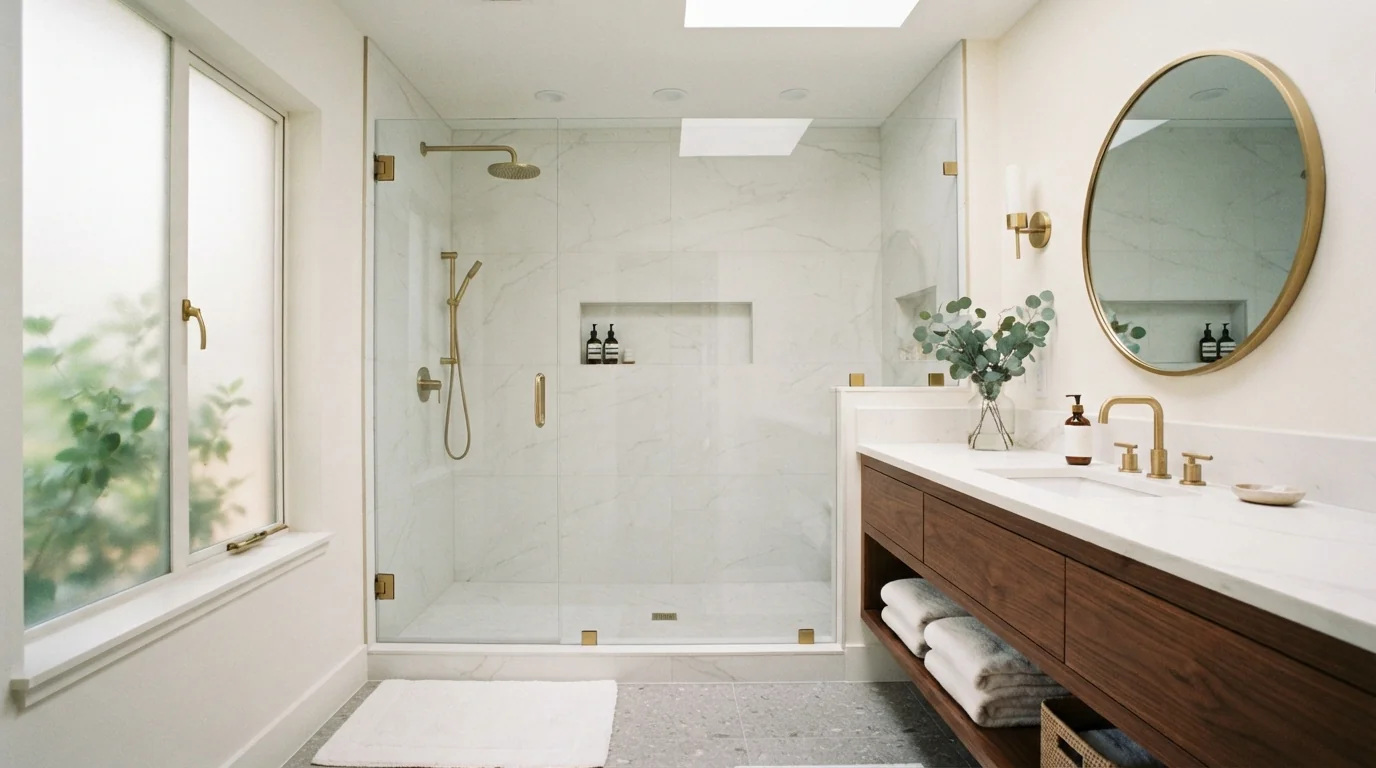
Bathroom plumbing relocation in Dallas moves drain, vent and supply lines to new fixture positions, by trenching or tunneling on a slab or working from the crawlspace on pier and beam. Moving or adding fixtures needs plumbing and building permits here, and on a slab each moved fixture runs roughly 2,000 to 8,000 dollars in market data.
What moving bathroom plumbing actually involves
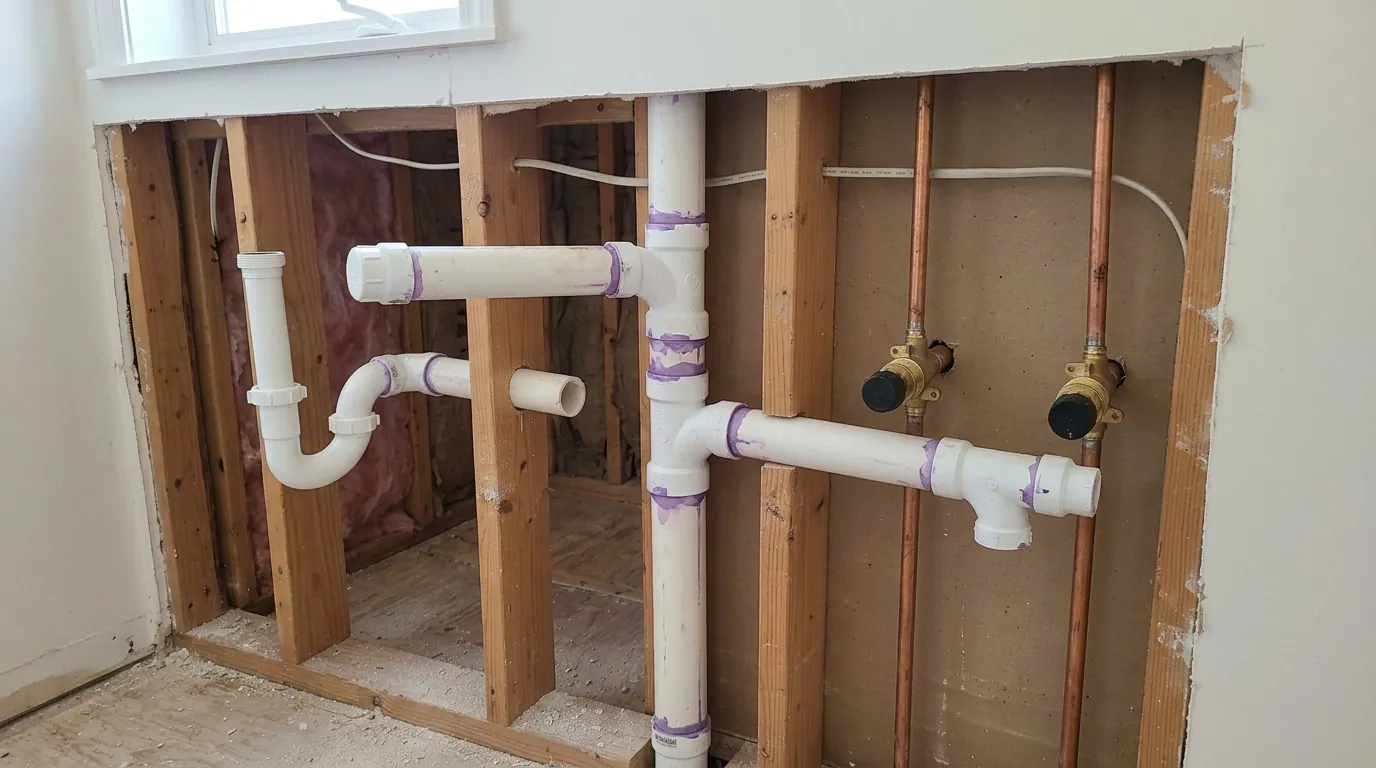
A fixture needs three things where it lands: a drain that falls at the right slope to the main line, a vent so it drains without gurgling or siphoning the trap, and hot and cold supplies sized for it.
Drains are the hard part. A toilet needs a 3-inch drain, showers and tubs need 2-inch, and all of them need a steady fall. On a slab that means cutting concrete; on pier and beam it means working under the house.
Supplies are easier to move, and we often replace old galvanized or undersized lines at the same time with PEX or copper home runs.
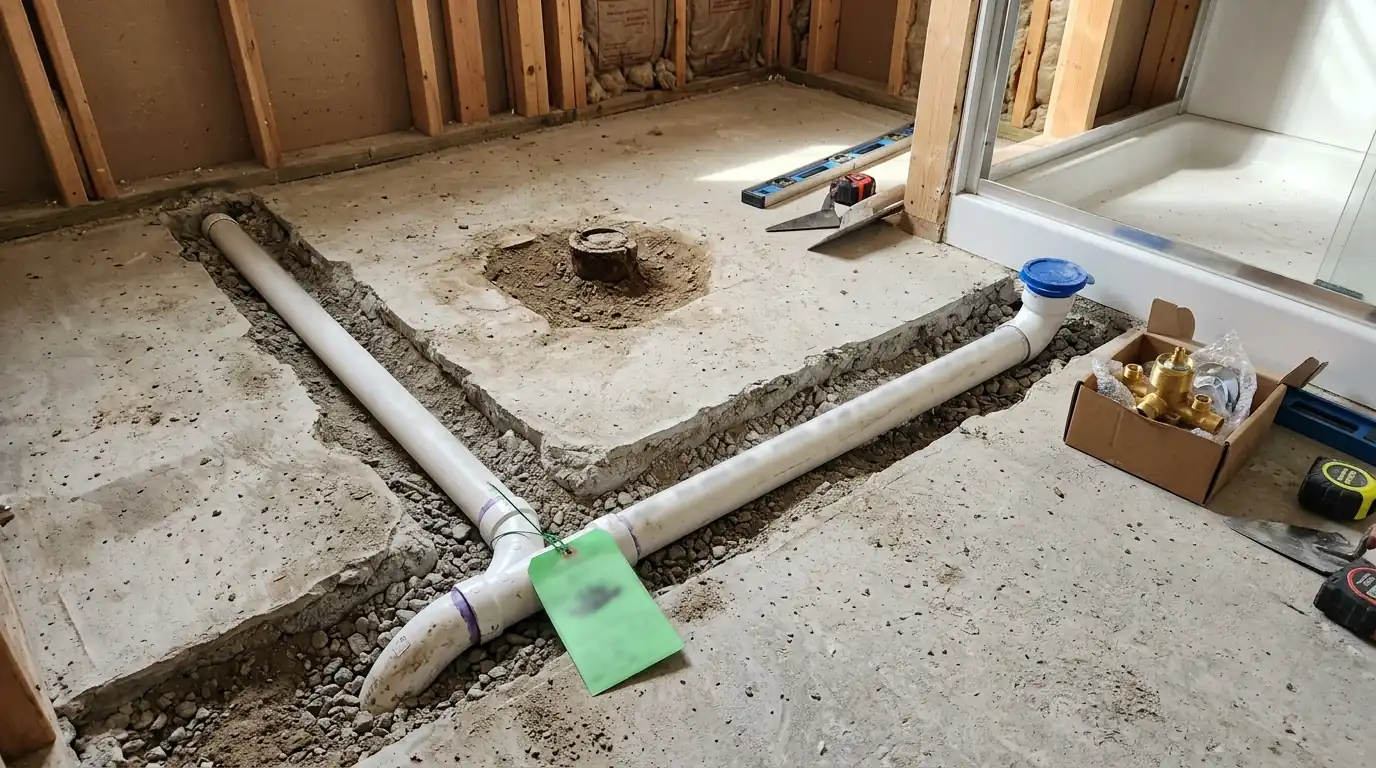
Trench or tunnel on a slab?
| Trenching through the slab | Tunneling under the slab | |
|---|---|---|
| How it works | Cut a strip of concrete to the line | Dig under the foundation |
| Best when | The bathroom floor is coming up anyway | Finished floors should stay intact |
| Disruption inside | Dust and concrete work in the room | Little inside the house |
| Foundation beams | Cut only where needed and patched | Avoided |
| Relative cost | Lower for short runs | Higher, priced by length |
| Patch | Concrete patched level for new floor | Tunnel backfilled and compacted |
The three relocation jobs we do most
Moving a Drain on a Slab (Tunnel or Trench)
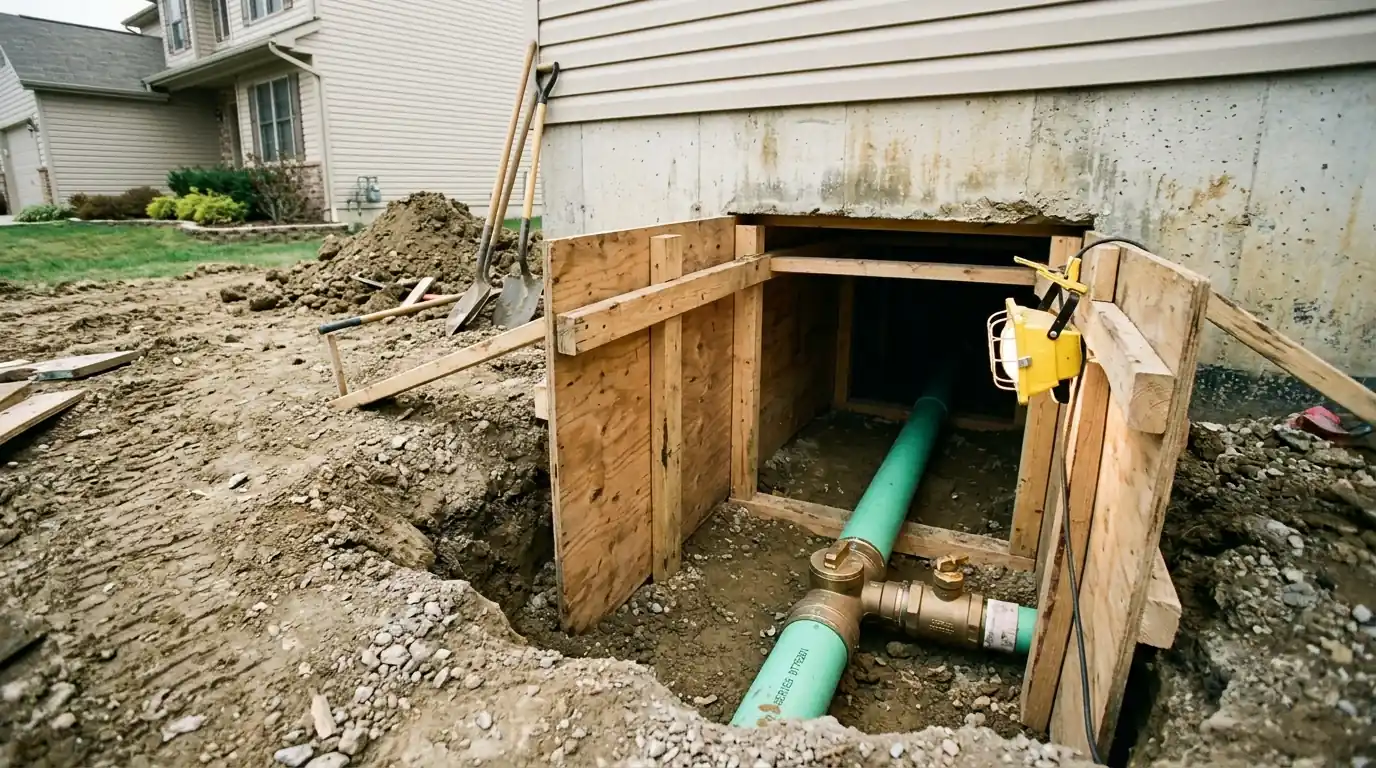
On a slab, drains run in the soil under the concrete. To move one, we either trench, cutting a strip of slab from the new fixture to the existing line, or tunnel, digging under the foundation from outside or from a small opening. Trenching is faster where the floor is coming up anyway; tunneling avoids cutting finished floors and foundation beams. The new line is laid at the right slope, tested before backfill, then the trench is packed and the concrete patched level for the new floor.
Planning range, moving one fixture on a slab foundation: $2,000 to $8,000 per fixture.
Rerouting Supply and Drain Lines on Pier and Beam
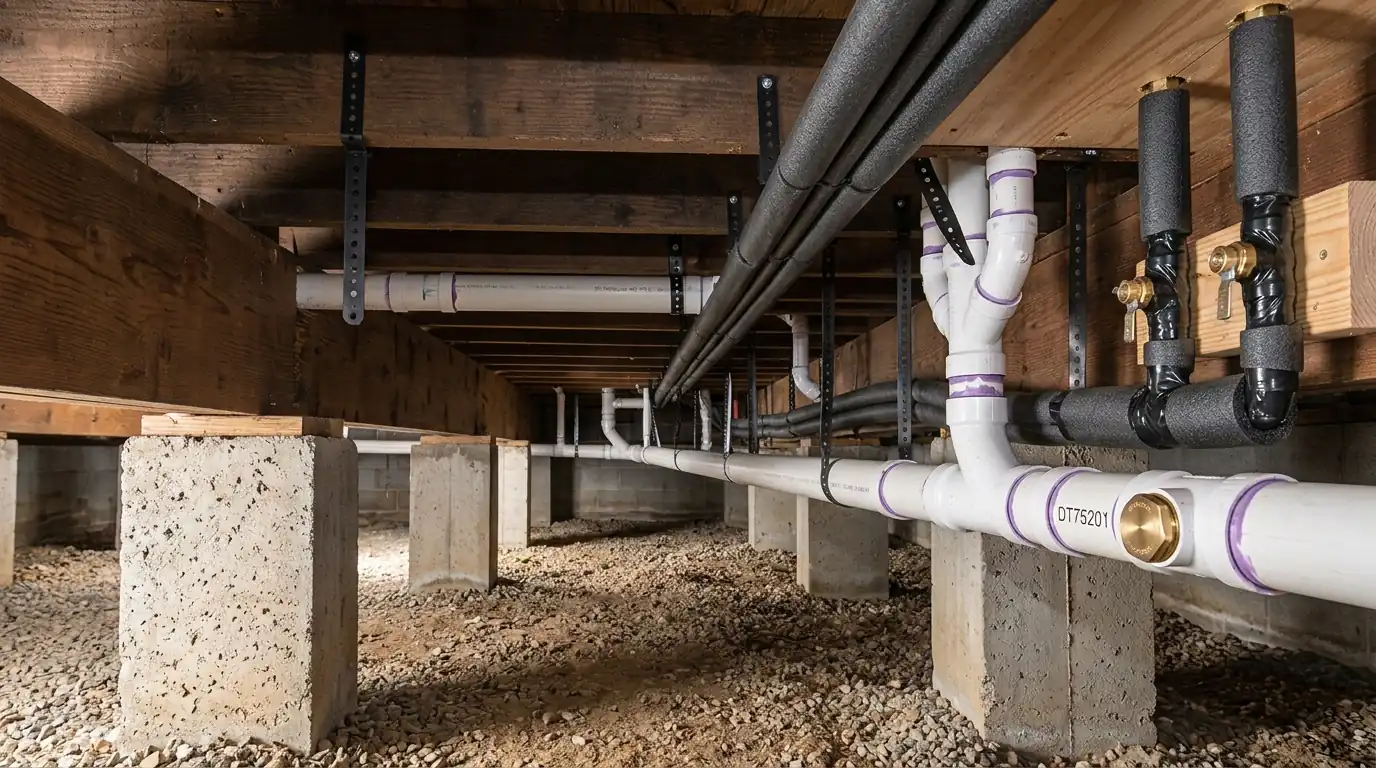
Pier-and-beam houses have a crawlspace under the floor, so drains and supplies can be moved without cutting concrete. We open the floor at the new fixture position, run the drain with proper slope and support to the existing line, add a vent where needed, and hang new supply lines insulated where they cross the crawlspace. Rotted subfloor or joists found at the old fixture location are repaired at the same time, since that is often why the layout is changing.
Adding a Second Sink or Shower Rough-In
Adding a fixture means a new drain branch, a vent and a new supply pair. For a second vanity sink, the new drain can often tie into the existing sink drain with a proper fitting inside the wall, keeping slab work small. A second shower or a separated tub needs its own 2-inch drain and trap. We size the supply so both fixtures run at once without the pressure dropping, and check that the water heater can keep up with the extra demand.
What decides the cost of moving plumbing
Plumbing moves are priced per fixture and by how hard it is to reach the lines.
Planning range, moving one fixture on a slab foundation: $2,000 to $8,000 per fixture. Market data, not a quote.
Slab or crawlspace
Crawlspace work avoids concrete cutting and patching.
Distance moved
A longer drain run means more trench or tunnel.
Trench or tunnel
Tunneling costs more but spares finished floors.
Venting
A new vent path to the attic adds work.
Supply replacement
Replacing old galvanized lines while open adds material.
Permits and inspection
Permits and scheduled inspections are part of the job.
Permits for moving bathroom plumbing in Dallas
Dallas requires plumbing and building permits when fixtures move or are added, and adding a bathroom or removing walls brings a building permit with plans. Fees for bathroom work typically run about 50 to 700 dollars depending on scope, with applications made through the city's DallasNow portal. We file before any concrete is cut, and the new lines are inspected before the slab is patched or the floor closed.
How long moving plumbing takes
Permits come first, so the start date follows the city's review. On site, moving a drain on a slab is usually a few days of cutting or tunneling, laying and testing the line, then the inspection before backfill and patching. Crawlspace work is faster. The patched concrete needs to cure before tile goes over it, which is built into the remodel schedule.
How a plumbing relocation runs
- 1
Call and describe the new layout
What moves and where.
- 2
Locate existing lines
Stacks, drains and supplies mapped.
- 3
Plan the routes
Drain slope, vent and supply paths drawn.
- 4
Permits
Plumbing and building permits filed.
- 5
Open and move
Trench, tunnel or crawlspace work done.
- 6
Test and inspect
Lines pressure- and flow-tested, then inspected.
- 7
Close up
Slab patched or floor closed, ready for finish work.
Plumbing relocation questions
Something else? Call and ask, any hour.
Yes, by trenching or tunneling to the new position.
Market data puts it at roughly 2,000 to 8,000 dollars per fixture on a slab.
Yes; moving or adding fixtures needs plumbing and building permits.
Trenching if the floor is coming up; tunneling to spare finished floors.
Without one, drains gurgle, run slowly and can siphon the trap.
Yes, it is the easiest time to do it.
It comes first; see layout changes.
More Accessibility & Repairs work we do in Dallas
Accessible Bathroom Remodel
Roll-In Shower with Fold-Down Seat and more, in Dallas.
Learn moreBathroom Water Damage Repair
Subfloor Replacement Around the Tub or Toilet and more, in Dallas.
Learn moreGrab Bar and Safety Installation
Grab Bars Anchored Into Studs or Blocking and more, in Dallas.
Learn moreFrom our guides
Plan the lines before the layout
Call and describe what you want to move. We will locate the existing lines and tell you whether it is a trench, a tunnel or a crawlspace job.
2353 Bryan St, Dallas, TX 75201