Signs your shower is leaking behind the wall, and what to do in a Dallas home
Hidden shower leaks show up somewhere other than the shower. Here is what to look for, where the water is usually coming from, and when it cannot wait.
By Russell Leach, Bathroom Remodeling Guides EditorUpdated October 20264 min read
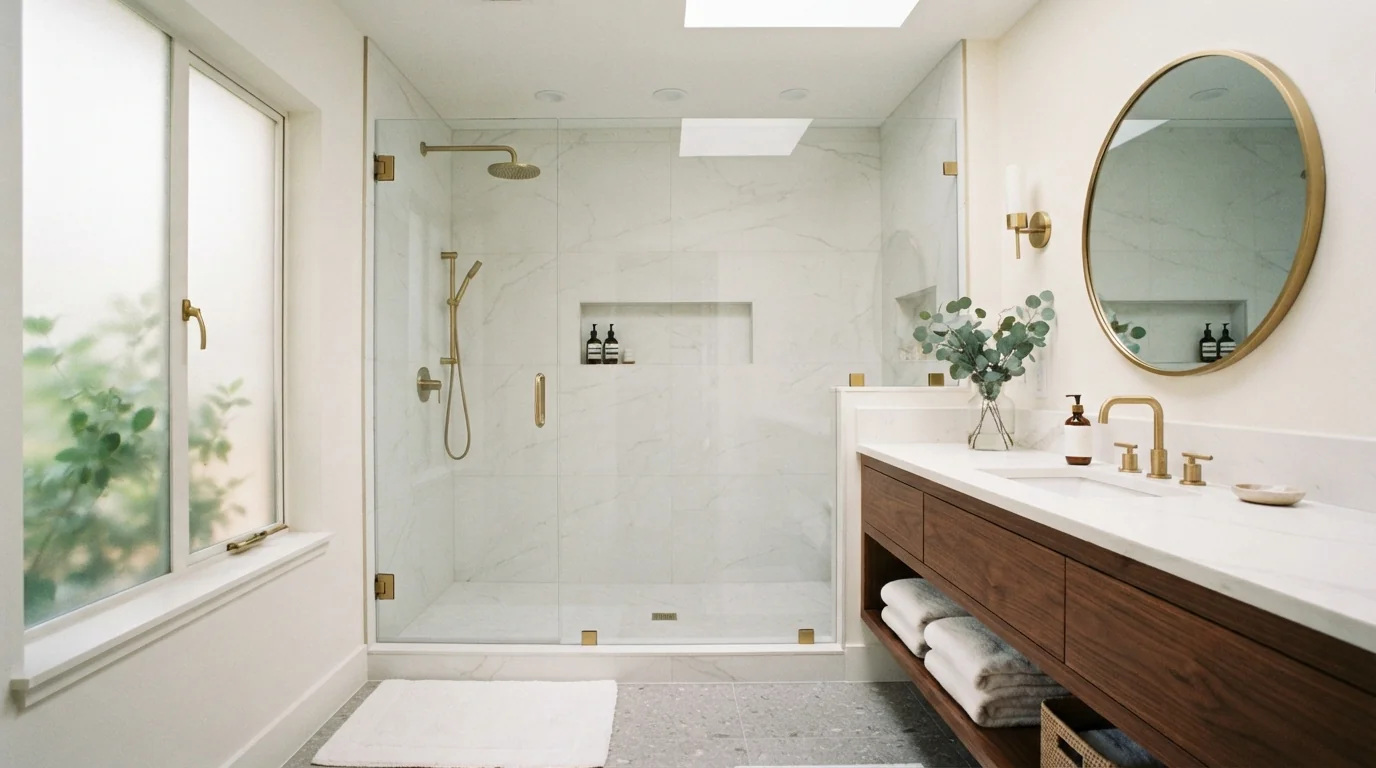
A shower leaking behind the wall usually shows up outside the shower: a stain on the ceiling below, peeling paint or swollen trim beside it, a soft floor at the curb, or a musty smell that returns. The usual sources are the pan, the valve connections or failed grout and caulk, and each needs a different fix.
Why hidden leaks matter more in Dallas
Hidden water damage, mold and rotted subfloor are the usual surprises when a leaking shower is finally opened. In older homes the plumbing behind the wall may also be outdated, which makes a slow leak more likely.
Dallas adds a second reason. The city sits on clay that swells when wet and shrinks when dry, and plumbing leaks are a known trigger for foundation movement here. A shower leak that reaches the slab is not only a bathroom problem.
The signs to look for
Most of these appear away from the shower itself, which is why hidden leaks run for months before anyone notices.
- A yellow or brown stain on the ceiling below the bathroom.
- Peeling paint, bubbling or swollen baseboard on the wall beside the shower.
- A soft or lifting floor at the curb or in front of the tub.
- Grout that cracks at the same corner again and again.
- Tiles that sound hollow or move when pressed.
- A musty smell that comes back after cleaning.
- Damp or stained drywall in a closet behind the shower.
Where the water is usually coming from
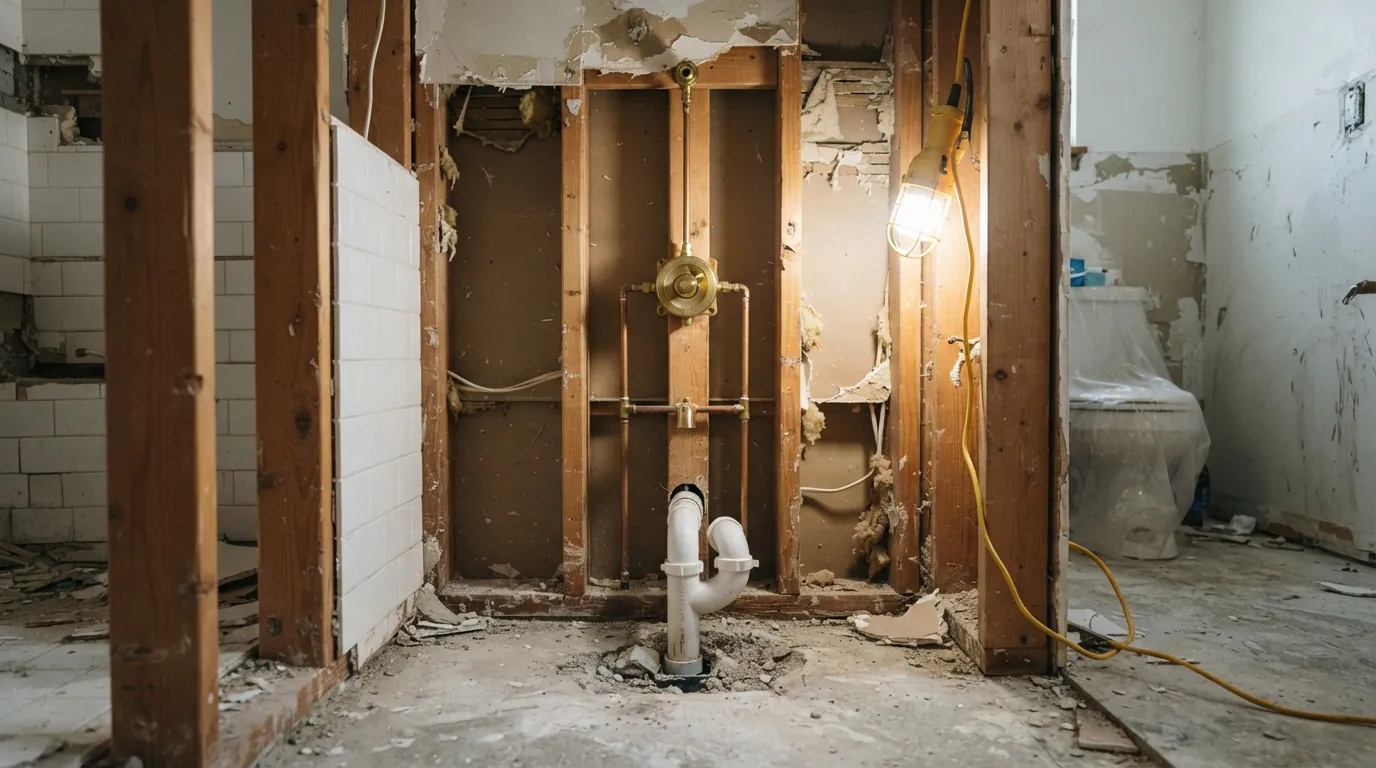
Shower leaks start in one of three places. The pan and liner under the shower floor leak whenever the shower is used, soaking the floor structure. The valve and supply connections inside the wall leak only while the water is on, often into the room behind the handle. Grout and caulk leak when water runs down the wall into an open joint at the curb or a corner.
Each fix is different, so knowing which one it is saves you from paying for a retile that does not stop the stain. See shower leak repair for how each is found and fixed.
Simple checks you can do at home
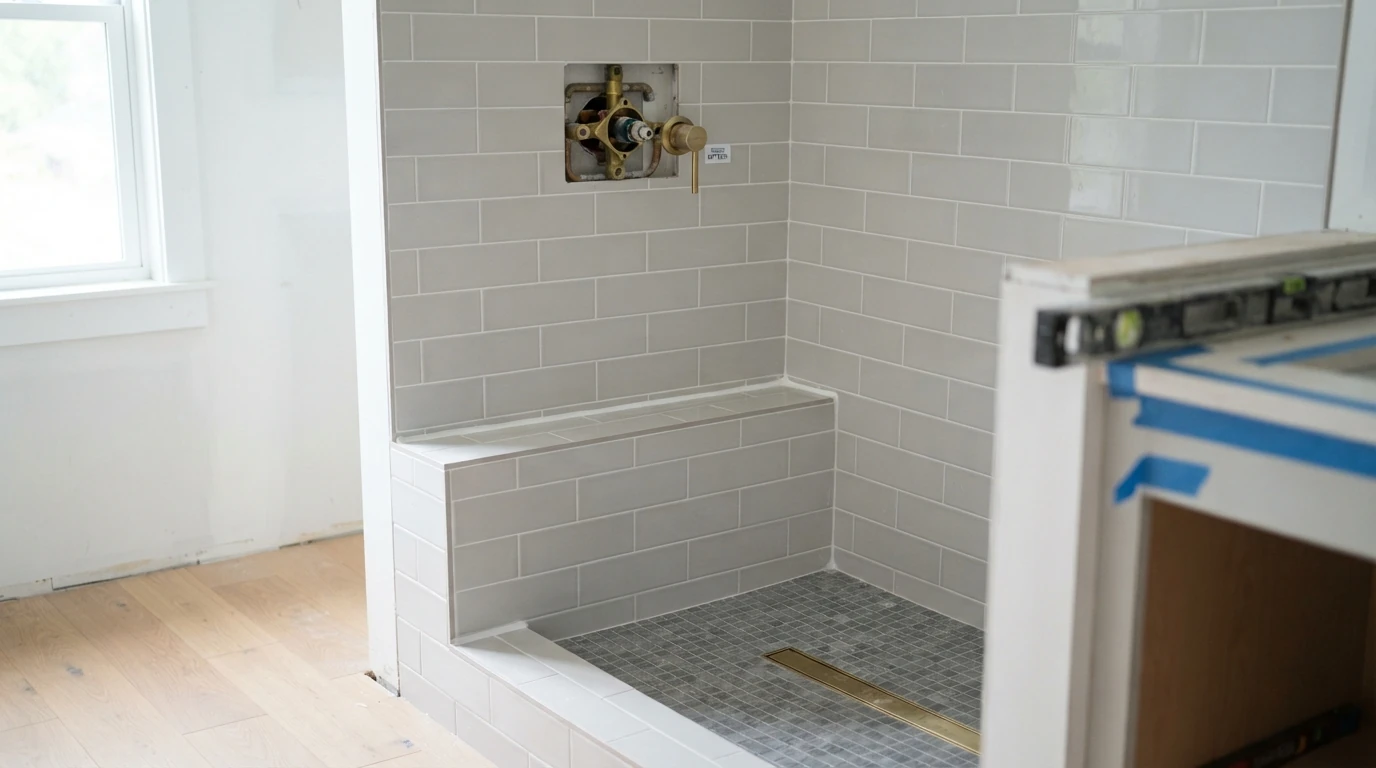
Look first. Check the ceiling below, the walls beside and behind the shower, and the floor at the curb. Note whether a stain grows after the shower is used; that points to the pan or the grout rather than the valve.
Then isolate. With the shower off, pour water only on the shower floor near the drain for a few minutes and watch below. Another day, spray only the walls. If the stain appears only while the shower runs normally, the valve is the likely source. Stop if you see water coming through; you have found enough.
Seeing a stain below the bathroom? Call (214) 646-2836, any hour.
Call nowWhat a professional leak test looks like
A proper diagnosis tests each source on its own rather than guessing. The drain is plugged and the pan flooded, usually for 24 hours, to see whether the level drops or a stain appears below. The valve and supply connections are checked under pressure with the drain open. The walls are sprayed separately to test grout and caulk.
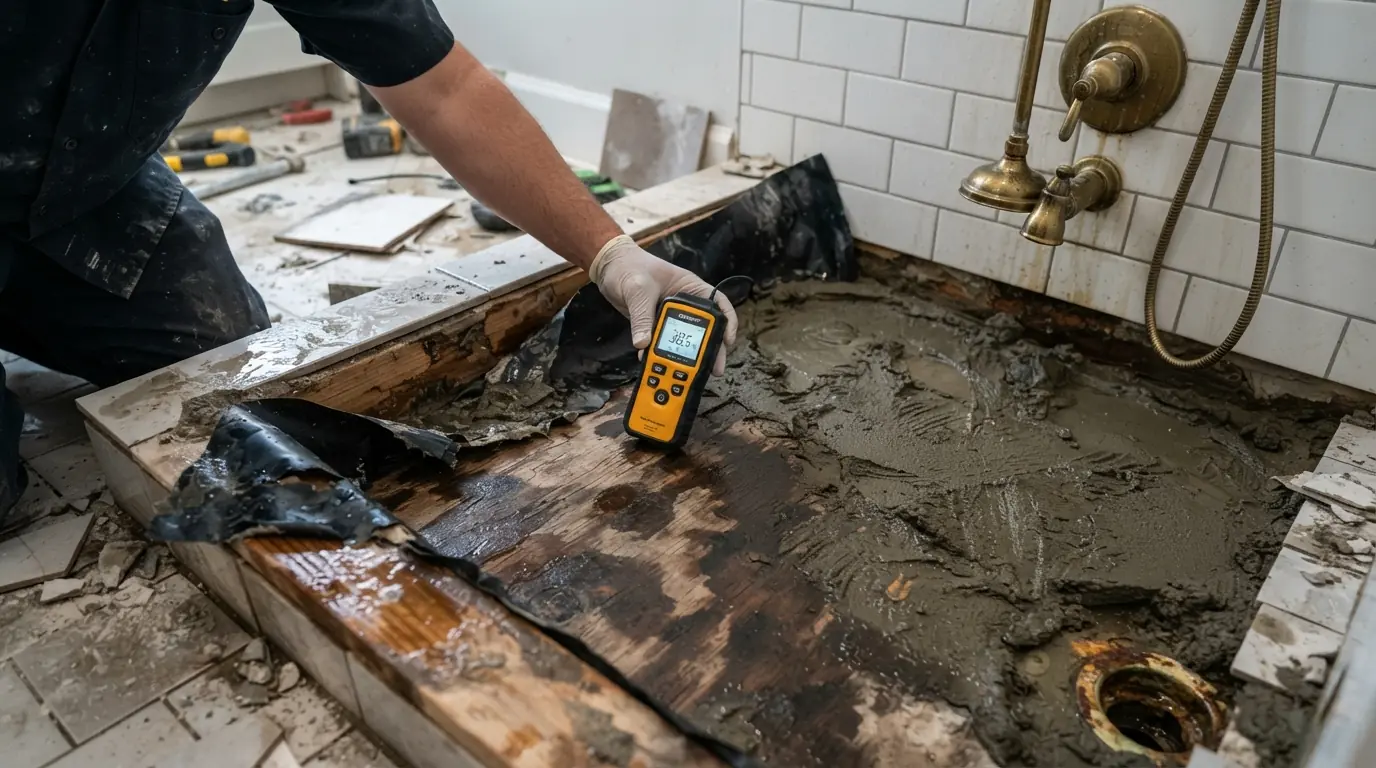
A moisture meter maps how far the water has travelled through the floor and walls, which decides how much has to come out. Only then is anything opened, and from the least visible side where possible, such as a closet behind the valve.
When it cannot wait
If water is dripping through a ceiling, the ceiling is sagging, or a floor is spongy underfoot, stop using the shower and call. The same applies if the leak sits over a slab and the stain keeps spreading.
A single cracked grout line or a split caulk joint with no staining is a repair to schedule, not an emergency. See tile and grout repair.
What the repair usually involves
The source is fixed first: a new pan, a valve repair from the least visible side, or regrouting and recaulking. Wet drywall, subfloor or framing is cut back to dry material and dried before anything is closed, then rebuilt with moisture-resistant board and waterproofing. The ceiling below is repaired last, once it is dry. See water damage repair for the rebuild.
Hidden shower leak questions
Something else? Call and ask, any hour.
Stains below, damp walls beside it, a soft floor at the curb or a returning musty smell.
Not until the source is known; every use adds water.
No; a toilet seal or supply line can do it too, which is why the source is tested.
Only if the caulk joint is the source.
A leak that reaches the soil under a slab adds water to clay that is sensitive to it, so do not leave it running.
Someone who tests each source before opening walls; see shower leak repair.
Find the source before the damage spreads
Call and tell us where the water is showing up. Someone answers any hour, and we will tell you what to shut off and how we will find the source.
2353 Bryan St, Dallas, TX 75201