Bathroom fans and humidity in Dallas homes: sizing, ducting and control
Peeling paint, mildew and a mirror that never clears usually come down to a fan that is too small, too restricted, switched off too soon, or not venting outside at all.
By Russell Leach, Bathroom Remodeling Guides EditorUpdated October 20264 min read

A bathroom fan in a Dallas home should move about one cubic foot per minute per square foot of floor in a standard bathroom, vent through smooth duct to a roof or wall cap outside, and run for about twenty minutes after a shower. A fan that vents into the attic moves the moisture, it does not remove it.
The four reasons a fan does not work
Most humidity problems in a bathroom trace back to one of four things.
- The fan is too small for the room.
- The duct is long, crushed or full of tight bends, so the fan moves little air.
- The duct ends in the attic instead of outside.
- The fan is switched off as soon as the shower ends.
Sizing a fan
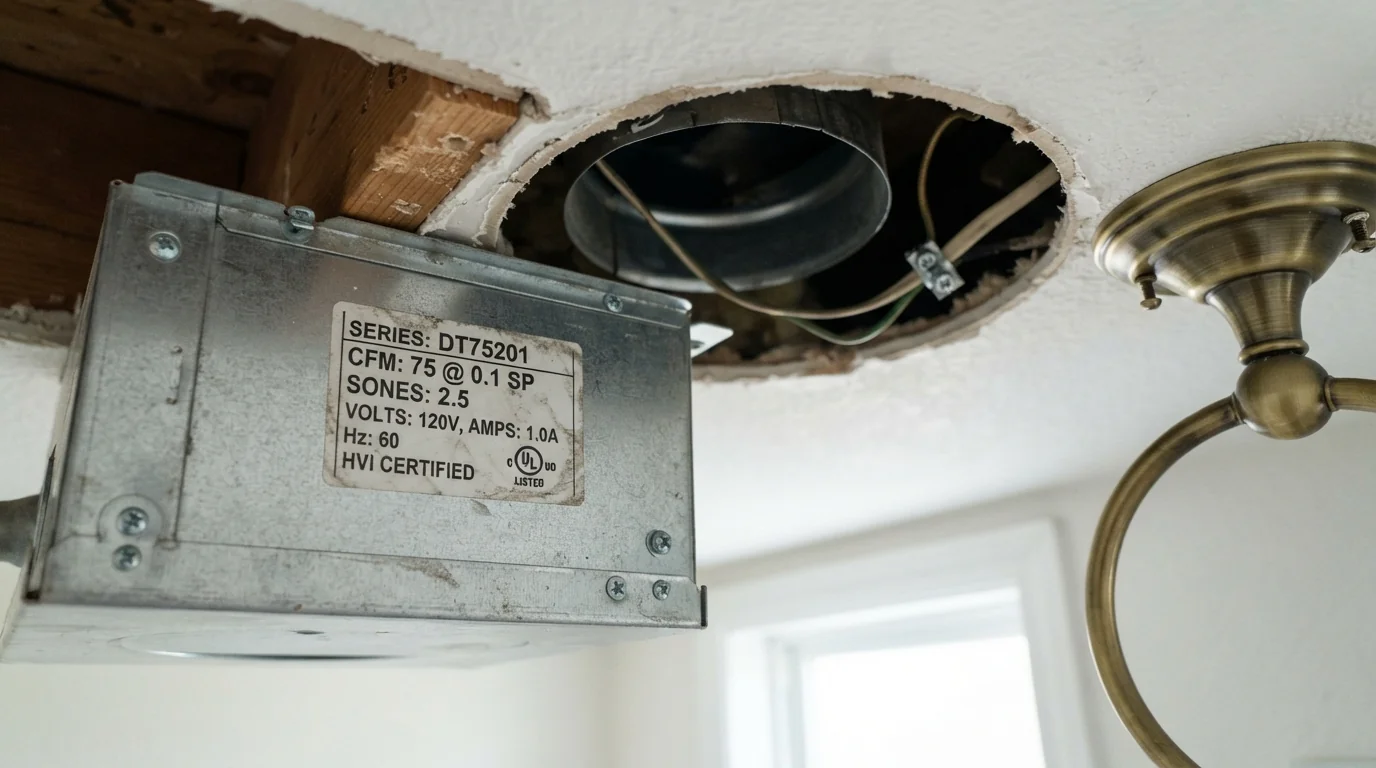
The common rule for a standard bathroom is about one CFM of airflow per square foot of floor, so a 5 by 8 bathroom needs about 40 CFM and a 10 by 10 master about 100. Larger or taller rooms, and rooms with a separate enclosed shower or toilet, need more.
Noise matters too, because a loud fan gets switched off early. Look at the sone rating as well as the airflow; quieter fans get used longer, which is when they do their work.
Why the duct matters more than the fan
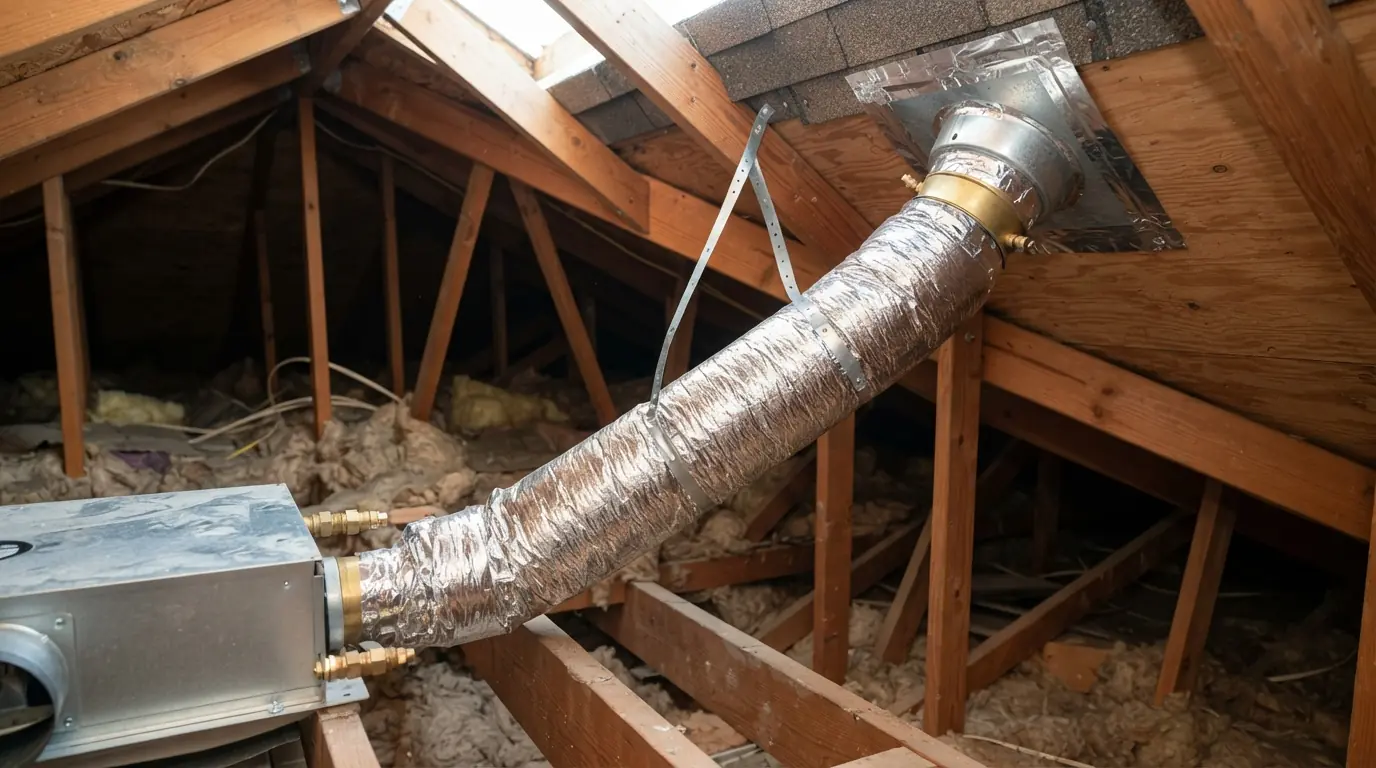
A fan's rating assumes a short, smooth duct. A long flexible duct with tight bends can cut its real airflow dramatically. The best runs are short and straight, in rigid or smooth insulated duct, to a roof jack or wall cap with a damper.
In an attic, uninsulated duct lets warm, wet air condense inside it and drip back into the fan. Insulated duct prevents that.
The attic problem
In older and builder-grade homes a fan duct sometimes stops in the attic insulation or was never connected at all. That puts moist air onto the roof deck and insulation instead of outside. If you can safely look in the attic, follow the duct from the fan; it should end at a cap on the roof or an outside wall.
Rerouting it outside is usually a straightforward job and often the single change that fixes a fogged mirror and peeling paint.
Mirror still fogged after the fan runs? Call (214) 646-2836, any hour.
Call nowBeyond the fan: air in and water out
A fan can only pull air out if air can get in. A bathroom door with a small gap at the bottom, around three-quarters of an inch, lets replacement air in; a tightly sealed door starves the fan and it moves far less than its rating.
Small habits help too. Squeegeeing the shower walls and glass after use, leaving the door open once the fan has run and hanging towels to dry outside the bathroom all reduce the moisture the fan has to deal with. None of these replace a working fan, but together they make mildew far less likely.
Controls that keep the fan running
A countdown timer or a humidity-sensing control keeps the fan running after the shower ends, usually about twenty minutes. Some fans have a sensor built in; otherwise a wall control does the job. New wiring for a control or fan needs a Dallas electrical permit.
Signs the damage has already started
Peeling ceiling paint, black mildew at the top of the tile, a swollen door or trim, and a musty smell that returns after cleaning mean moisture has been sitting on surfaces for a while. Fix the fan first, then repair the finish. See exhaust fan installation and ceiling repair.
Bathroom fan questions
Something else? Call and ask, any hour.
About one CFM per square foot for a standard bathroom, more for large or tall rooms.
It should not; it should vent through a roof or wall cap outside.
About twenty minutes after a shower.
Often a restricted or disconnected duct.
Yes, if people forget to leave the fan on.
New wiring or a new circuit needs a Dallas electrical permit.
Get the moisture out for good
Call and describe what you are seeing. We will check where the fan actually vents and what it would take to fix it.
2353 Bryan St, Dallas, TX 75201