Replacing galvanized pipes during a Dallas bathroom remodel
If your house was built before the 1960s, there is a good chance its bathroom still runs on galvanized steel pipe. A remodel is the best time to replace it.
By Russell Leach, Bathroom Remodeling Guides EditorUpdated October 20264 min read
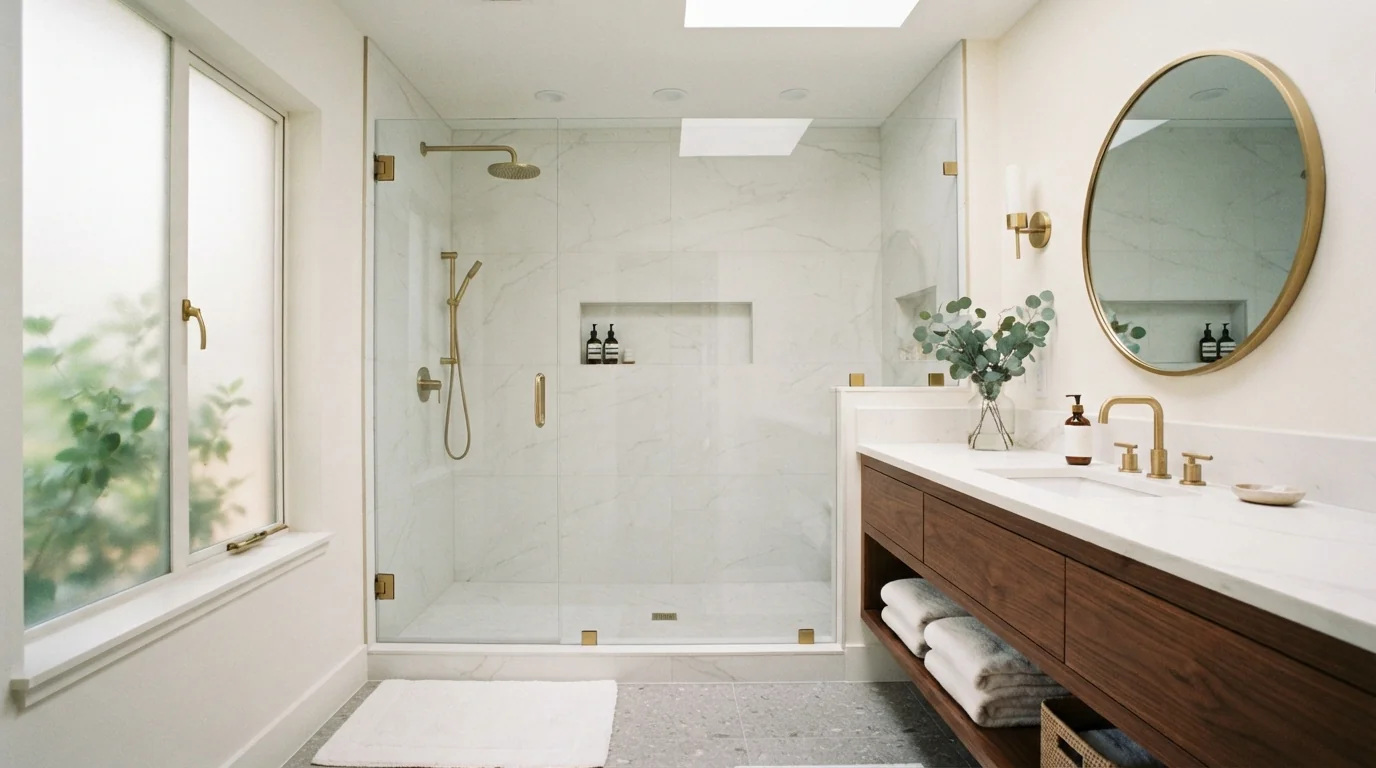
Many older Dallas homes still have galvanized steel supply pipes, which corrode from the inside in the area's mineral-rich water, narrowing the pipe until pressure drops and leaks start. Replacing them with PEX or copper during a bathroom remodel, while the walls are already open, costs a fraction of what a separate repipe would after the new tile is in.
What galvanized pipe is
Galvanized pipe is steel coated with zinc to slow rust. It was the standard material for household water lines through the middle of the last century and was replaced by copper and later plastic. It lasts a long time, but not forever: once the zinc wears through, the steel corrodes from the inside.
In Dallas, the problem is sped up by mineral-rich water, and older homes frequently still have galvanized supply pipes corroded inside. About fifteen percent of occupied homes in the city were built before 1950, the era when galvanized supply lines were most common.
How to tell if you have it
Look where the water supply comes through the wall under a bathroom sink or behind the toilet. Galvanized pipe is dull gray steel with threaded joints; copper is reddish-brown and soldered; PEX is flexible plastic, usually red, blue or white.
The symptoms are easier to spot than the pipe: water pressure that has dropped over the years at one bathroom, brown or orange water when a tap that has been sitting is first turned on, and small leaks at joints. A pipe that looks fine outside can be badly narrowed inside.
- Dull gray steel pipe with threaded joints
- Pressure that has slowly dropped
- Rusty water after the tap sits
- Leaks at threaded joints
Why the remodel is the time
Most of the cost of replacing bathroom supply lines on its own is access: opening walls, cutting tile and patching afterward. During a remodel, the walls and floor are already open, so the new lines go in with little extra labor. Replacing galvanized pipe after new tile is installed means cutting into the finished walls again.
It also protects the remodel. A new shower valve connected to forty-year-old galvanized pipe puts the oldest, weakest part of the system right behind the newest tile. If the old pipe leaks a year later, the new shower is what gets opened up.
Old pipes behind your bathroom walls? Call (214) 646-2836, any hour.
Call nowWhat replaces it
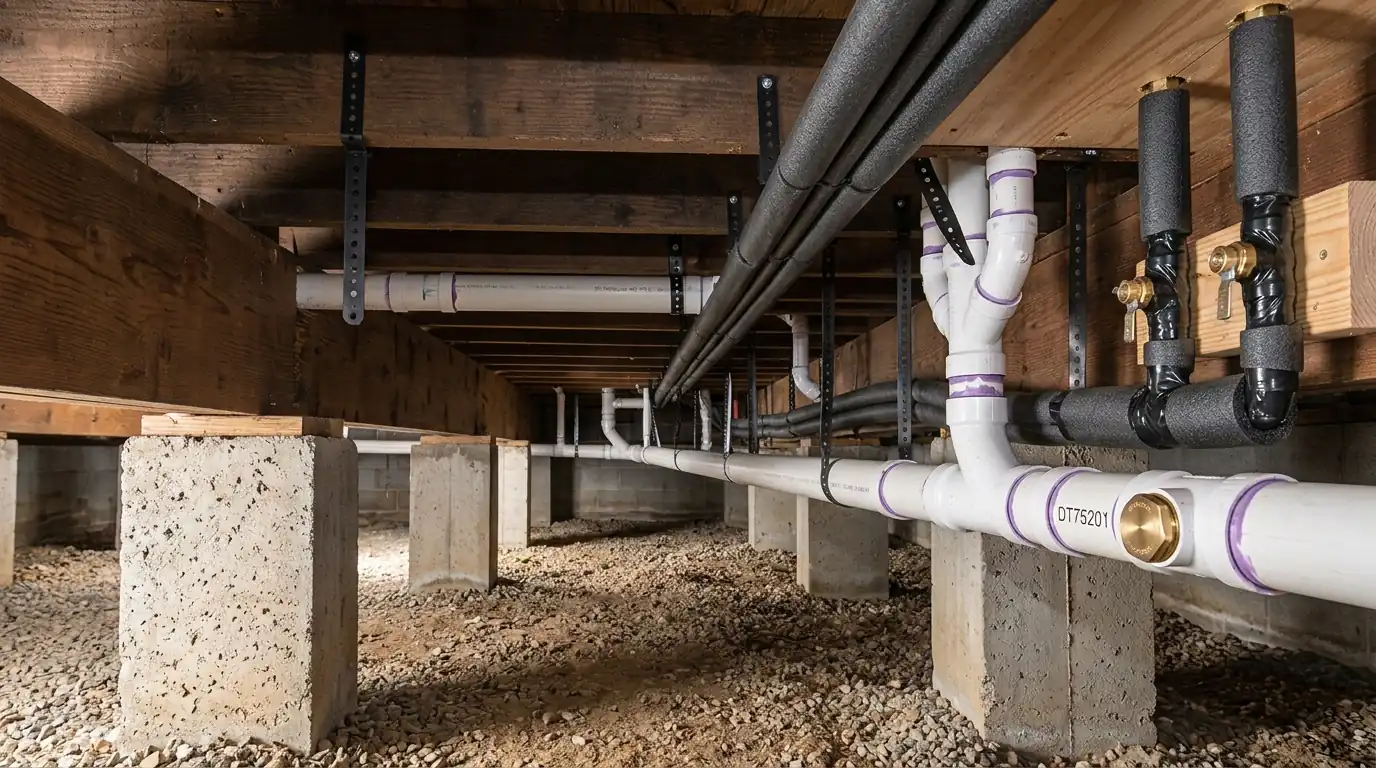
The two common replacements are PEX and copper. PEX is flexible, quick to install, tolerates freezing better and flexes with small movements of a slab or framing. Copper is rigid and long-proven. Either is a sound choice; the right one depends on the rest of the house and how far the replacement needs to run.
The new lines run from the nearest sound pipe to each fixture, with new shut-off valves at the sink and toilet, and are pressure-tested before the walls are closed. In Dallas, plumbing changes need a permit and an inspection.
Drains too
Homes old enough to have galvanized supply lines often have cast iron drains as well. Cast iron rusts along the bottom of the pipe and cracks, which shows up as slow drains and sewer smell. A camera inspection during the remodel shows its condition, and failing sections can be replaced while the floor is open. Our bathroom repiping page covers both, and the slab plumbing guide explains drain work under concrete.
Galvanized pipe questions
Something else? Call and ask, any hour.
Decades, but in hard water it narrows and leaks with age.
Both are reliable; PEX is quicker to install and flexes with movement.
Not always; a bathroom can be repiped back to sound pipe.
Yes, plumbing changes need a permit and inspection.
If narrowed galvanized pipe is the cause, yes.
If a camera inspection shows rust-through or cracks, yes.
Replace old pipes while the walls are open
Planning a remodel in an older house? Call and we will check the supply and drain lines as part of the walkthrough.
2353 Bryan St, Dallas, TX 75201