Moving bathroom plumbing on a slab foundation in Dallas: what it takes
Most Dallas bathrooms sit on concrete. Moving a toilet, shower or sink means reaching drains cast under that slab, and that shapes cost, schedule and design.
By Russell Leach, Bathroom Remodeling Guides EditorUpdated October 20264 min read
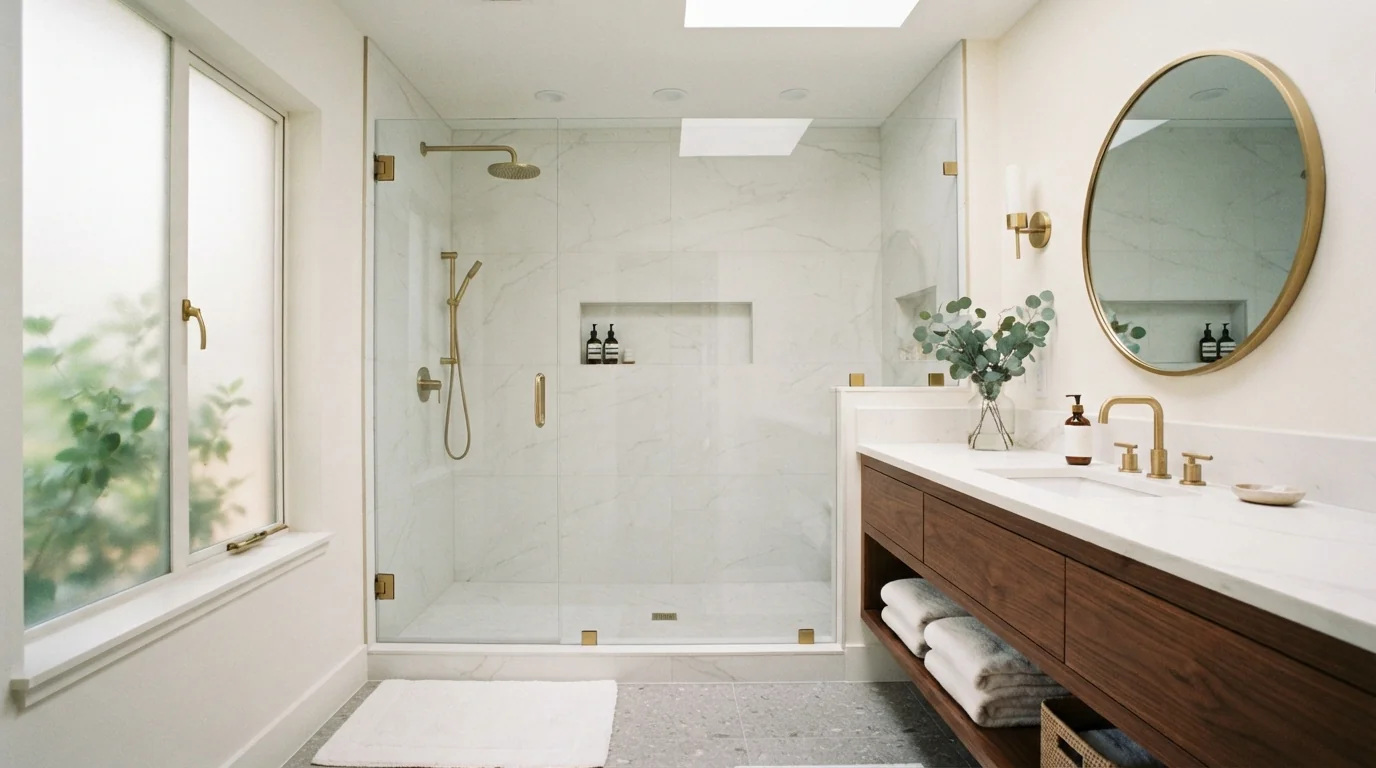
Moving bathroom plumbing on a slab in Dallas means trenching through the concrete or tunneling under the foundation to reach the drain lines, then patching the slab once the new lines pass inspection. Market data puts each moved fixture at about 2,000 to 8,000 dollars, and plumbing and building permits are required.
Why a slab changes everything
On a pier-and-beam house, drains run through a crawlspace and can be moved from underneath. On a slab, they run in the soil below the concrete, so every drain move means cutting or digging to reach them. Supply lines are easier, running in walls and ceilings.
Dallas adds soil to the equation. The Blackland clay under the city shrinks and swells with the seasons, and plumbing leaks under a slab are one of the known triggers of foundation movement. A moved drain has to be sloped, supported and tested properly for that reason.
Trenching or tunneling
There are two ways to reach a drain under a slab. Which one fits depends on the floor and the distance.
| Trenching | Tunneling | |
|---|---|---|
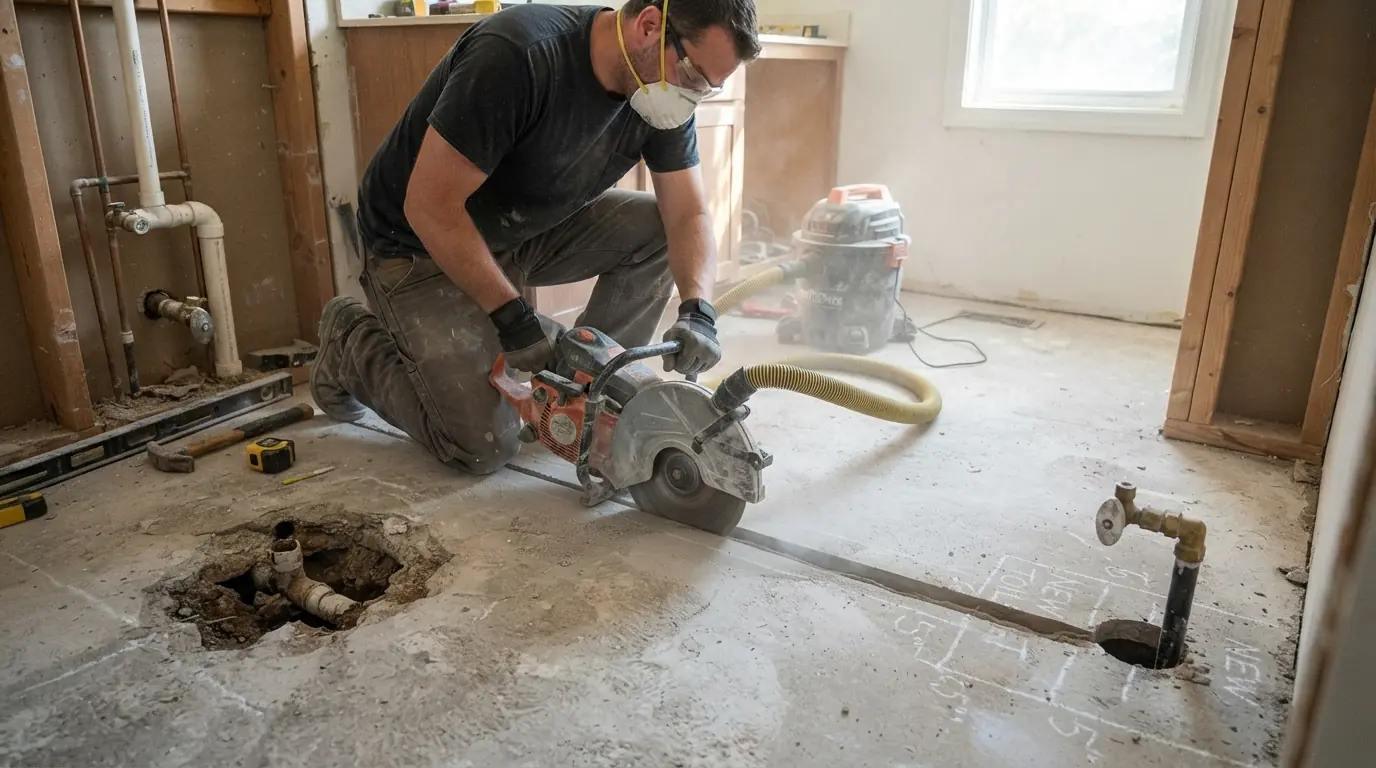
| How it works | Cut a strip of slab to the existing line | Dig under the foundation from outside or a small opening |
| Best when | The bathroom floor is coming up anyway | Finished floors should stay intact |
| Inside the house | Concrete dust and noise in the room | Little disruption inside |
| Foundation beams | Cut only where unavoidable, then restored | Avoided |
| Relative cost | Lower for short runs | Higher, priced by length |
What it costs
Market data for DFW puts each moved fixture on a slab at about 2,000 to 8,000 dollars. The spread comes from distance, trench versus tunnel, how many fixtures move together, whether a new vent is needed and how much finished floor has to be restored.
Moving two fixtures that share a trench costs less than two separate moves, which is worth knowing when planning a layout.
Permits, inspections and timing
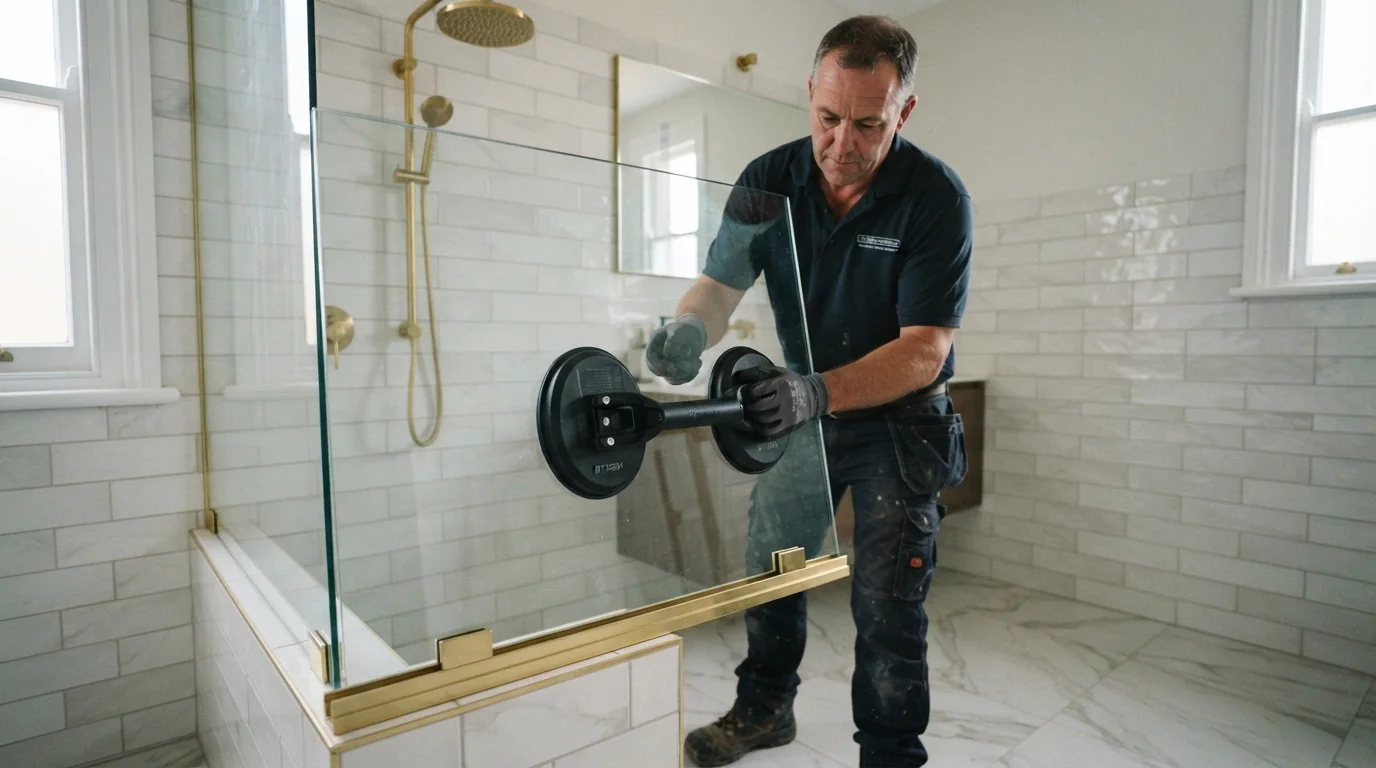
Moving or adding fixtures in Dallas needs plumbing and building permits, which published guides put at about two weeks to approve. On site, the new lines are laid, tested and inspected before the trench is backfilled and the concrete patched. The patch then cures before tile goes over it.
In practice, a layout change adds roughly a week at the front of a remodel for cutting, laying, inspection and patching.
Thinking about moving a fixture? Call (214) 646-2836, any hour.
Call nowWhen moving plumbing is worth it
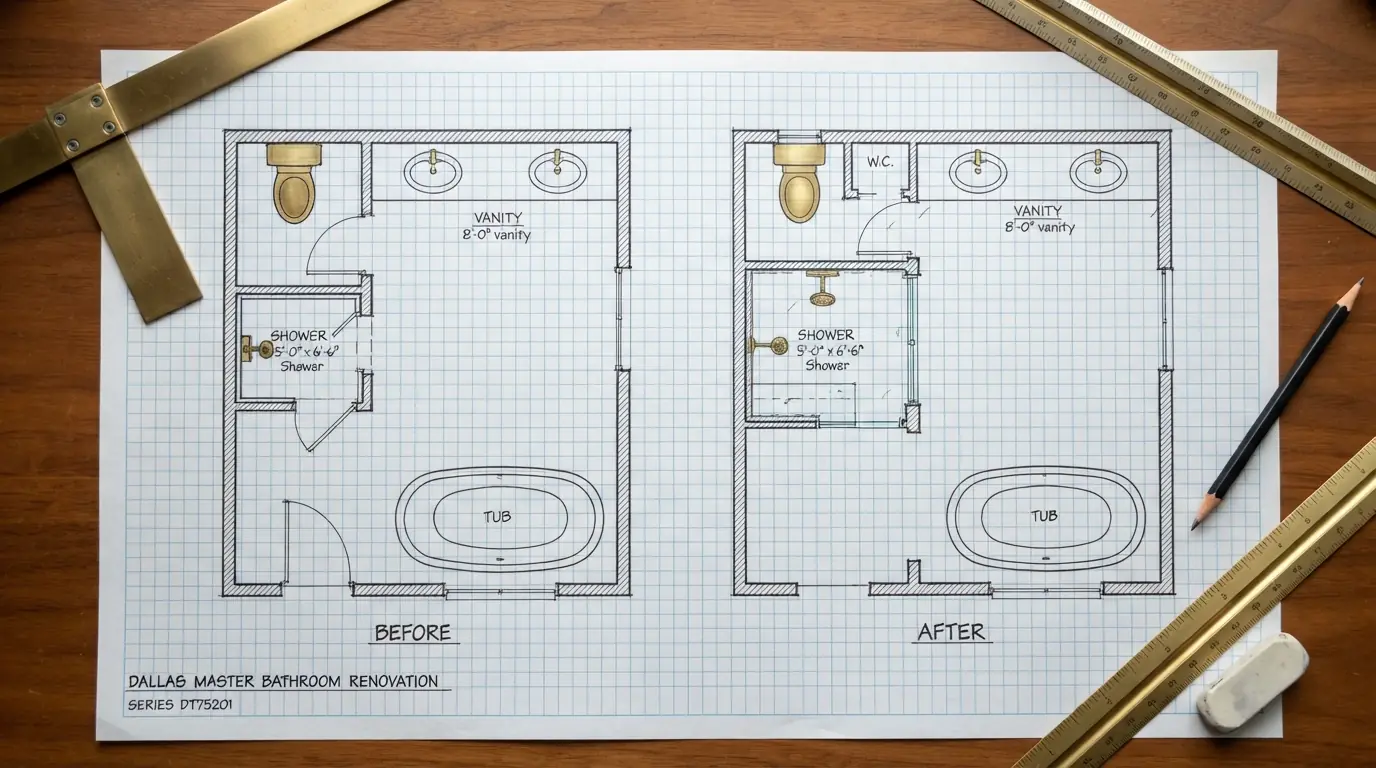
It is worth it when the current layout does not work: a toilet visible from the bedroom door, a shower too small to use, a vanity whose drawers cannot open, or a closet next door that can become real bathroom space. It is rarely worth it for a small aesthetic shift.
Often a smaller change gets most of the benefit. A second sink can sometimes share the existing drain, and a shower can grow along the existing drain line rather than moving across the room.
Questions to ask before moving plumbing
Whoever plans the move should be able to answer these before any concrete is cut.
- Where is the nearest stack or main line the new drain will join?
- Will the moved fixture need its own vent, and where will it run?
- Trench or tunnel, and why for this floor?
- How will the slab be patched and leveled for the new tile?
- When is the rough-in inspection, and what happens if it fails?
How we plan a slab relocation
We map the existing stacks and drains, draw the new layout over them, and price every relocation as its own line so you can see what each move costs. Where two options exist, trenching and tunneling or moving and not moving, we price both. See plumbing relocation and layout changes for the full process.
Slab plumbing questions
Something else? Call and ask, any hour.
Yes, by trenching or tunneling to the new position.
Market data puts it at about 2,000 to 8,000 dollars per fixture.
It spares finished floors but costs more; trenching suits floors that are coming up anyway.
Yes, plumbing and building permits for moved or added fixtures.
Roughly a week at the start, plus permit approval.
Done properly, no; the lines are sloped, tested and the slab restored.
Price the move before you commit
Call and describe the layout you want. We will map the existing drains and tell you what each move would take and cost.
2353 Bryan St, Dallas, TX 75201